
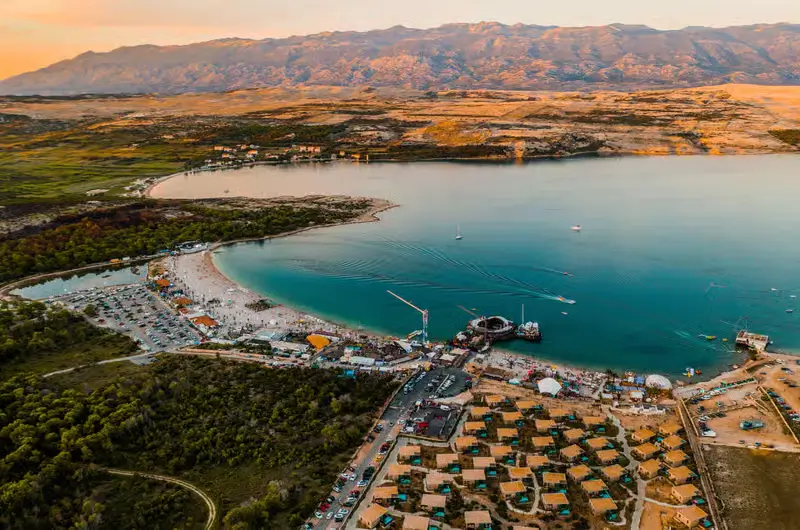
Pag Island, reached from Zadar by bridge or ferry, is known for its barren limestone landscape, strong winter winds, and historic Pag Town with its lace-making tradition and fifteenth-century layout. The island also features salt pans, old olive groves, and konoba restaurants serving grilled fish, octopus, and peka-style lamb.
Zrće Beach near Novalja draws crowds for its party scene, though parking and summer congestion are common challenges. Pag cheese, a protected sheep’s milk product, is best bought directly from producers. Spring and early autumn offer milder weather and fewer tourists, while cars or buses provide practical ways to explore the island’s interior.
Pag Island is an ideal destination for those seeking diverse experiences, from its stark, beautiful landscapes reminiscent of the moon to its bustling nightlife and culinary delights. This travel guide is perfect for tourists, adventure seekers, and food enthusiasts looking to explore one of Croatia’s unique islands.
Essential Insights for Exploring Pag Island: What You Need to Know
Pag is the strange one. Drive across the bridge from Zadar and within ten minutes the greenery vanishes, replaced by pale limestone that looks like someone scraped the top off the planet. Most visitors come for the moonscape, the nightlife at Zrće, and the cheese. I come back every spring for the quiet parts.
The first thing to understand is the wind. The bura blows hard from the northeast in winter, and the island is bare enough that it hits you full force. On my first spring recce trip I parked my hatchback near Novalja’s harbour and watched a plastic chair cartwheel across the promenade. Plan around the weather, not against it.
According to Real Adriatic, 80% of Pag Island visitors cite the landscape and cheese as primary reasons for their visit, underscoring the island’s unique allure.
Discovering the Unique Features of Pag Town’s Moonscape
Pag Town sits on the north coast, facing Zadar across a narrow channel. Its old centre is a tidy grid of stone houses, built on a plan from the fifteenth century, with the Church of St. Mary and the Ducal Palace forming the main square. The lace tradition, paški čipka, still survives in a handful of workshops around the Kneževa Street area, and the pieces sold to tourists are often made by women who learned the craft from their mothers.
Head south-east from town and the landscape turns austere. The salt pans near Kolan and the stone walls running in every direction give the impression of a place that resisted cultivation for centuries. Walk the trails above the Lun olive grove, one of the island’s oldest, and you will see trees that predate most of the houses in Novalja. Bring water. Shade is a rare commodity out here.
Where to Enjoy a Delicious Lunch in Pag
Konoba culture here is simple. Expect grilled fish, octopus under the peka, and lamb cooked slowly in a covered iron dome. Two places I return to are a family-run konoba on the road between Pag and Šimuni and a small place in Dinjiška with four tables and no sign. Book ahead in July. Walk-ins get the leftovers.
Zrće Beach Experience and the Exciting Novalja Nightlife
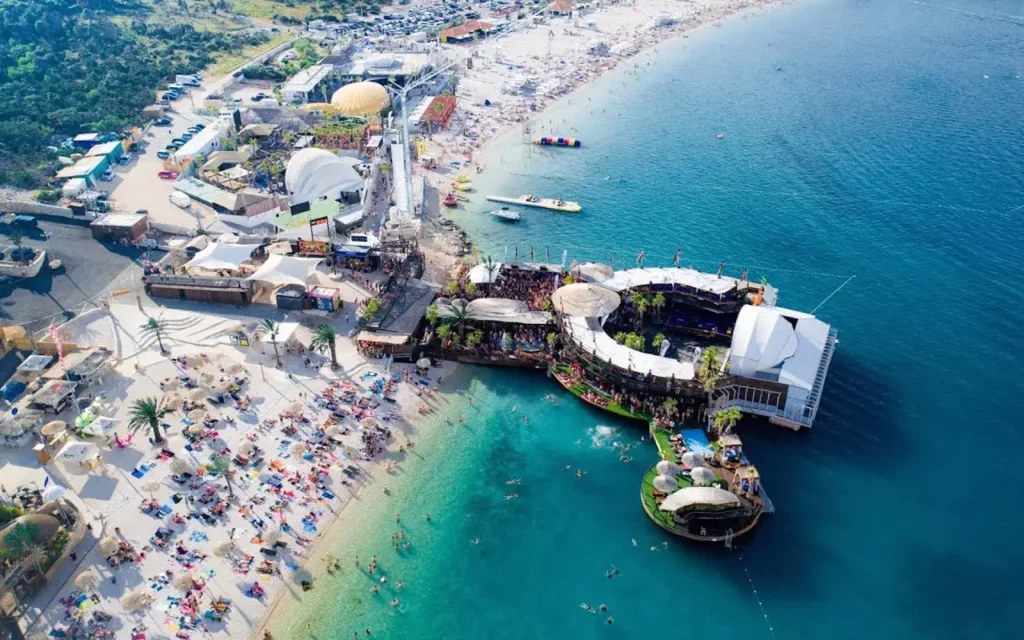
Zrće is Pag’s answer to the party question, and it is loud. The beach is a long stretch of pebbles and shallow sea on the island’s north-west coast, lined with bars that run from late afternoon until dawn in peak season. Novalja, the nearest town, becomes a different place in July and August. Hotels fill, and the promenade gets crowded after midnight.
Don’t expect a quiet swim in the middle of July. Go early, around nine in the morning, and the beach is almost empty. Pebbles are the reality, so bring water shoes. If you want a relaxed day with the party on the horizon, Zrće works well on a weekday in late June or early September, when the crowds thin but the bars stay open.
Getting Around: Parking and Access to Zrće Beach
The July parking problem is real. The lot closest to the beach fills before ten in the morning, and the overflow road gets blocked by coaches. A friend from Zagreb who drove down last summer spent forty minutes circling before giving up and walking from Novalja, which took twenty-five minutes. Park in town and walk. Buses from Pag and Zadar also run regularly during the season.
Exploring the Rich Flavors of Pag Cheese
Paški sir is the reason many people end up here with an empty suitcase and a full heart. It is a hard sheep’s milk cheese, salty, sharp, and aged for several months in a mixture of salt and sometimes olive oil. The flavour comes from the sheep grazing on wild herbs like sage, thyme, and rosemary, which give the milk its distinct character.
Buy from producers, not from souvenir stalls. Look for cheese with a protected designation of origin label and a producer’s name you can trace. Prices for a kilogram of well-aged cheese usually fall somewhere between 25 and 40 euros, depending on maturity and season. Younger cheese is softer and milder. Older cheese crumbles and tastes intense. Ask the seller which one they recommend, and taste before you commit.
Cheese travels fine in a cool bag, but check your airline’s rules on carrying hard cheese in hand luggage. Pack it in the hold if in doubt.
Practical Tips for Planning Your Pag Trip
Pag is reachable by car via the Maslenica bridge on the Zadar road, or by ferry from Zadar to Pag Town. The drive from Zadar to Novalja takes roughly an hour in good traffic. Rent a car if you plan to explore the island’s interior, since buses cover the main towns but leave gaps. Accommodation ranges from budget apartments in Novalja to family-run guesthouses near Metajna. Expect to pay the boravišna taksa, the tourist tax, at checkout.
Spring and early autumn suit most travellers best. Temperatures are pleasant, the wind is manageable, and the island feels like itself again.
Frequently Asked Questions
Is Pag worth visiting outside summer?
It depends on what you want. If you come for the landscape, May, late September, and October are excellent. If you want nightlife at Zrće, you need July or August, when the bars run full programmes.
How do I get from Zadar to Pag without a car?
Take a bus from Zadar to Pag Town or Novalja, or the ferry to Pag Town. The bus is cheaper and runs more often during the season, but the ferry gives you a view of the coast on the way.
Can I buy Pag cheese in supermarkets?
Some supermarkets in Zadar and Zagreb stock it, usually in vacuum packs. Buying directly from a producer on the island gives you a wider range of ages and a better chance to taste before purchase.
Is Zrće Beach suitable for families?
Families do visit, especially in the morning and early evening. The party atmosphere peaks late at night, so parents with young children usually pick a different beach or a quieter area near Kolan.
What should I budget for a day on Pag?
A simple day with a konoba lunch, a bus ticket, and a drink at a bar might cost 40 to 70 euros per person. Prices rise noticeably in July and August, and a cheese purchase adds to the total.
What outdoor activities can I enjoy on Pag Island?
Pag Island offers a variety of outdoor activities, including hiking the trails around the Lun olive groves, cycling along the coast, or exploring the rugged landscape south-east of Pag Town. Water sports such as kayaking and windsurfing are also popular, especially along the island’s scenic beaches.
How can I experience the local culture on Pag Island?
One way to experience local culture is by visiting Pag Town’s old center and learning about the lace-making tradition at the workshops. Additionally, attending local events and festivals, or spending time at family-run konoba restaurants, will give you insight into the island’s rich cultural heritage.
Are there any nearby attractions that I should consider visiting?
If you’re staying on Pag Island, consider taking a day trip to nearby attractions like the historical city of Zadar, the beautiful Krka National Park, or exploring other Croatian islands in the area. Each offers unique insights and activities complementing the Pag experience.