
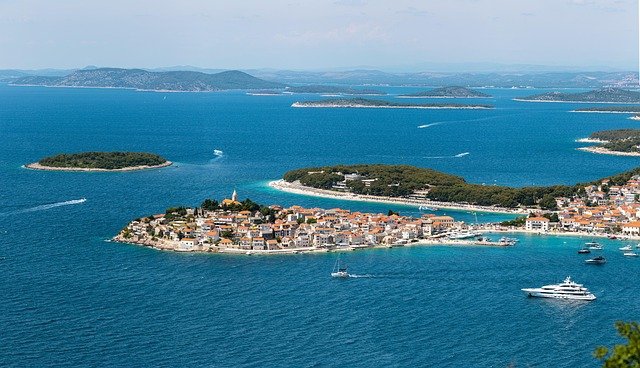
Purchasing coastal property in Croatia requires verifying the land registry extract, cadastre records, and urban planning certificates before committing, since discrepancies between ownership records and physical parcels are common. Buyers should confirm building and use permits, check for unregistered heirs, and understand restrictions tied to the public maritime domain and concessions near the coastline.
Additional considerations include budgeting for transfer tax, notary and legal fees, and obtaining an OIB identification number early in the process. Buyers should also verify utility connections, rental registration requirements, and tourist tax obligations, as rules vary by municipality and may change over time.
What You Actually Need to Check Before Signing a Croatian Coastal Purchase
Start with the land registry extract. Everything else follows from it.
I still remember a client from Zagreb, a retired engineer, who flew down to Split with a folder full of photographs and a very firm handshake for the seller. He loved a stone house above Seget Vranjica with a view that made him forget his knees. What he did not have was an up-to-date extract from the zemljišnoknjižni odjel, the land registry office at the county court. When we pulled it together, the house sat on two parcels, one of which was registered to a cousin who had died in 1998 and whose heirs had never completed the uknjižba. That single discovery added roughly four months and a notary’s worth of paperwork to his timeline. This checklist exists so you find those surprises before you pay a deposit.
Paper Trail: Land Registry, Cadastre, and Planning
Three documents sit at the core of any serious check. The first is the zemljišnoknjižni izvadak, the land registry extract, which tells you who owns the property, whether there are mortgages, easements, or pending disputes. Order it yourself or through your lawyer, and make sure it is dated within the last few weeks. The second is the katastar extract from the cadastre, which shows the physical shape, area, and land use of each parcel. Discrepancies between cadastre and registry happen more often than you would hope, especially in villages like Pisak near Omiš, where parcels were surveyed decades ago. The third is the urban planning certificate, the uvjerenje o namjeni prostora, obtained from the municipality or city planning department. It tells you whether building is allowed at all and what you could legally do with the plot.
Pay close attention to whether the house has a building permit and a use permit, the uporabna dozvola. Many older stone houses in Brela and Podgora were extended without permission in the 1980s. Buyers who skip this step often inherit a fine, or worse, a demolition order. Ask the seller for every permit in writing, then compare the house you see with the plans on file. The gap between them tells you a lot about the price you should pay.
Coastal Zone Rules You Cannot Ignore
Croatia’s coastal zone carries extra restrictions. Land within 100 metres of the sea, and especially public maritime domain, is governed by strict rules under the Maritime Domain and Seaports Act. A house may sit on private land while its jetty, boat ramp, or even a stretch of garden belongs to the state. Foreign buyers should also understand concessions: a beach bar or konoba terrace may operate under a concession granted by the state or the municipality, and that concession does not transfer automatically with the house. Ask directly whether any part of the property lies in public maritime domain and whether a concession exists. If the answer is vague, walk away or get a written opinion before you proceed.
Money, Taxes, and the Hidden Costs
Budget more than the sticker price. Transfer tax, the porez na promet nekretnina, is 3 percent of the sale value and is usually paid by the buyer, although the parties can agree otherwise. Notary and land registry fees typically add somewhere between 1 and 2 percent, depending on the value and the complexity of the file. A lawyer’s fee for a standard purchase often lands between 1 and 2 percent as well, and the figure varies with the scope of work. Add the cost of a translator if you do not read Croatian, and a surveyor’s fee if the cadastre and reality do not match.
Your OIB, the personal identification number, is required for almost everything. Foreign buyers obtain one at the local tax office, and you will need it before a notary will proceed. Plan for this at the start, because a delay here can push the whole process back by weeks. Ask your lawyer to confirm the seller’s OIB as well, so the transaction matches the registry entry exactly.
Utilities, Water, and Connections
Ask whether the property has an official water connection, electricity, and a sewage solution. Some houses in the hinterland of Makarska rely on cisterns and private wells, which require documentation and periodic inspection. Check that the electricity meter is registered in the seller’s name or can be transferred cleanly. Ask about waste collection too, since municipalities set those fees and some charge by household size.
Rental Potential and Tourist Tax
If you plan to rent the property, verify its status for short-term letting before you buy. Private rentals must be registered with the tourist board, and the owner must pay the boravišna taksa, the tourist tax, which varies by municipality and season. In popular towns like Hvar and Korčula, the rates and registration rules differ, and some cities have tightened quotas in recent years. A property that earns well in July may be restricted next year, so ask the municipality about current limits instead of relying on what the previous owner told you.
Frequently Asked Questions
Can a foreigner buy property directly on the coast?
Generally yes, with reciprocity rules applying to citizens of some countries. Citizens of EU countries face the fewest restrictions. Non-EU buyers should confirm reciprocity with a lawyer before committing, since the rules depend on nationality and the type of land.
How long does the whole process take?
A clean file with a straightforward registry can close in six to eight weeks. Complications such as unregistered heirs, missing permits, or cadastre mismatches stretch that to several months, sometimes longer.
Do I need a lawyer if the notary handles the contract?
The notary authenticates the contract, but a lawyer works for you. Hire your own, because the notary is neutral and will not investigate the property’s history on your behalf.
Is a deposit refundable if the due diligence finds problems?
That depends entirely on the preliminary contract. Make the deposit refundable if the registry or permits fail to check out, and name those conditions in writing. Without that clause, you may lose the money.
What if I want to buy land to build on?
Whether you can build depends on the zoning category, the urban plan for the area, and whether utilities reach the plot. Check the urban planning certificate first, because plots marked for agricultural use rarely allow residential construction, regardless of their beauty.