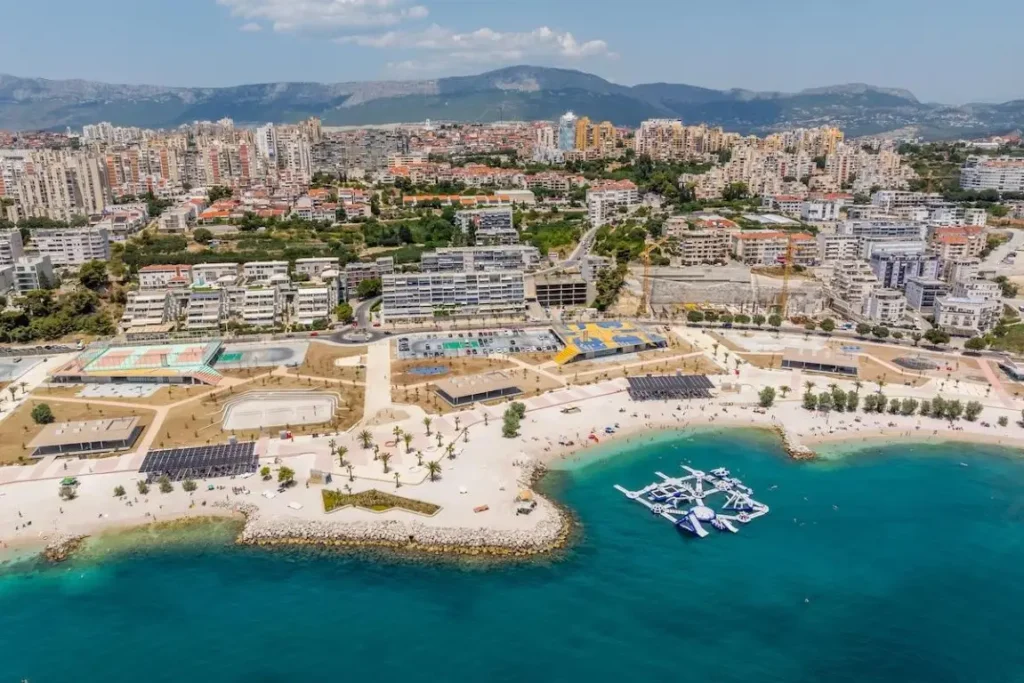
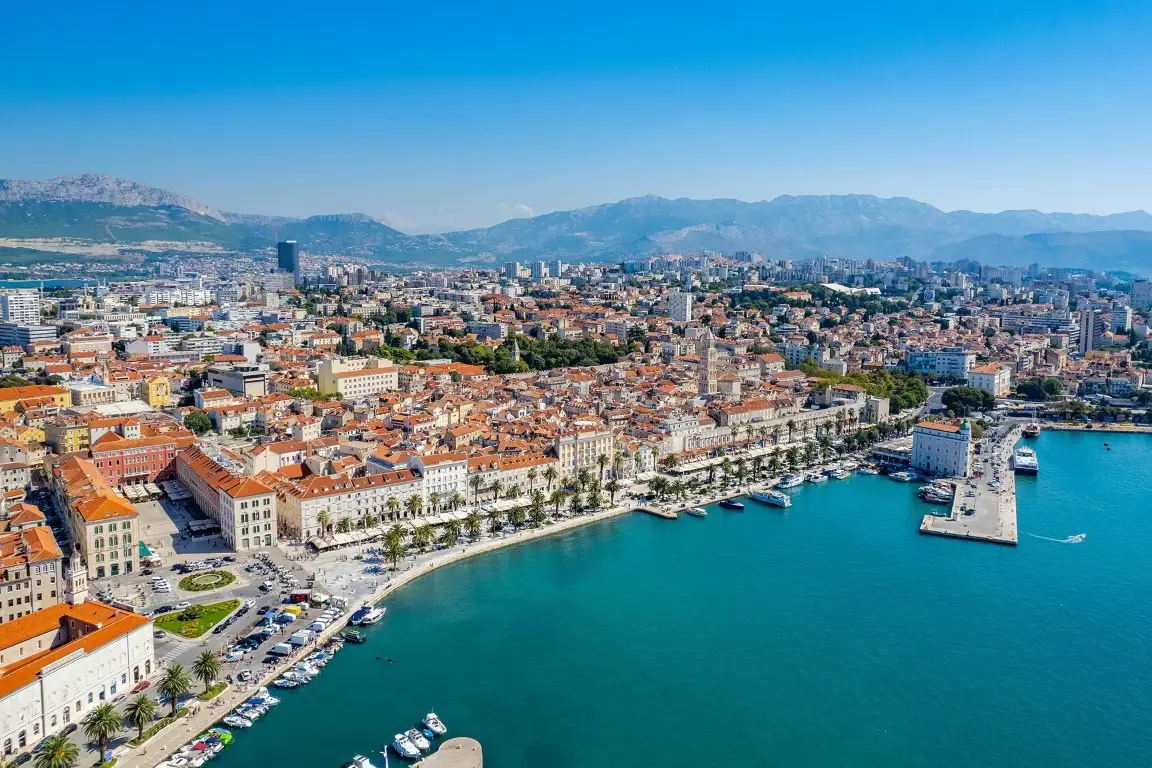
Split’s residential property market showed signs of stabilising asking prices in November 2026, with median apartment prices around €5,690–€5,977 per square metre and only minor monthly changes, despite annual growth of roughly 10.5%. Significant price gaps persist between premium neighbourhoods like Meje and Bačvice and more affordable areas such as Brda, while new-build and older apartments showed little price difference.
The report highlights emerging negotiating opportunities, particularly among long-listed or price-reduced properties, and notes rising advertised rents alongside flat sale prices. It advises buyers to verify actual usable space, compare neighbourhoods beyond central Split, and rely on transaction data rather than asking prices, while cautioning that broad market correction evidence remains insufficient.
Split Real Estate Market Update – November 2026: Prices, Neighbourhoods and Buying Opportunities
Market intelligence report | 13 November 2026
Split remains one of Croatia’s most expensive residential property markets, but recent asking-price data suggests that price momentum is slowing. For international buyers, this creates an opportunity to become more selective, compare neighbourhoods carefully and negotiate on individual properties rather than waiting for a market-wide correction.
1. Split Property Market Overview – What Buyers Need to Know
The most important takeaway is that Split’s property market is showing signs of price stabilisation in advertised prices, but there is not yet sufficient evidence of a broad market correction.
Recent listing data indicates that apartment asking prices remain historically high, although monthly price movements have become considerably smaller. Buyers should therefore concentrate on property-specific opportunities, including overpriced listings, older apartments requiring renovation and properties whose owners have already reduced their asking prices.
Three developments deserve particular attention:
- High property prices: One November listing snapshot recorded a median apartment asking price of approximately €5,977 per square metre.
- Slowing monthly momentum: Another listing dataset recorded a median asking price of €5,690/m² in November, compared with €5,700/m² in September.
- Neighbourhood price differences: Premium locations such as Meje, Spinut and Bačvice remain considerably more expensive than peripheral residential areas such as Brda.
It is important to distinguish advertised prices from completed transaction prices. A property advertised for €400,000 may ultimately sell for less. Publicly available data does not establish the actual negotiated discount across Split in November 2026.
2. Key Split Property Market Statistics – November 2026
The following figures provide an overview of advertised apartment prices, house prices and rental levels in Split.
| Market indicator | Latest available figure | Interpretation |
|---|---|---|
| Median apartment asking price | €5,977/m² | November listing snapshot |
| Median house asking price | €4,932/m² | October listing snapshot |
| Alternative apartment asking price | €5,899/m² | Alternative listing dataset |
| Median apartment size | 73 m² | November listing snapshot |
| Typical apartment asking price | €380,000–€390,000 | Varies by dataset |
| Median monthly asking rent | €18.90/m² | November 2026 |
Monthly Apartment Price Changes
One listing-based dataset recorded the following median apartment asking prices:
| Month | Median asking price | Monthly change |
|---|---|---|
| September 2026 | €5,700/m² | – |
| October 2026 | €5,706/m² | +0.11% |
| November 2026 | €5,690/m² | -0.28% |
Between September and November, the median asking price decreased by approximately 0.18%. This represents an almost flat market in advertised prices, rather than evidence of a substantial decline in property values.
Annual Apartment Price Growth
According to Nekretnine.hr’s September 2026 asking-price data:
- Average Split apartment asking price: €5,811/m².
- September 2025 asking price: €5,258/m².
- Annual increase: approximately 10.52%.
- Three-year increase: approximately 37.5%.
- Five-year increase: approximately 64.3%.
The comparison suggests that Split has become substantially more expensive over the past year, even though recent monthly asking-price movements indicate stabilisation.
Rental Market Developments
| Month | Median asking rent |
|---|---|
| September 2026 | €18.10/m² |
| October 2026 | €18.90/m² |
| November 2026 | €18.90/m² |
Advertised rents increased by approximately 4.42% between September and November. Meanwhile, apartment sale asking prices remained nearly unchanged.
This divergence is worth watching for property investors. However, higher advertised rents do not automatically translate into higher achieved rental income or better investment returns.
Broader Croatian Property Market
According to the Croatian Bureau of Statistics, residential property prices in Croatia increased by 2.7% quarter-over-quarter in Q2 2026 and 12.7% year-over-year.
- Existing dwellings: approximately 14.1% annual growth.
- New dwellings: approximately 9.2% annual growth.
- Adriatic coastal region: approximately 9.0% annual growth.
The contrast between national transaction-based indices and Split’s nearly flat recent asking-price series suggests that advertised prices and completed-sale prices are not necessarily moving at the same speed.
3. Three Important Trends Shaping Split’s Property Market
Trend 1: Buyers Are Finding More Negotiating Opportunities
One of the most interesting developments comes from Kvadratko’s analysis of more than 25,000 tracked Croatian property listings over a 100-day period, published in October 2026.
- Approximately 4.1% of tracked listings reduced their asking prices.
- Approximately 1.7% increased their asking prices.
- Approximately 94% maintained their original advertised prices.
- The typical reduction was approximately 7.5%, or €20,000.
- Apartment price reductions averaged approximately 6.1%.
- Split-Dalmatia County recorded a typical reduction of approximately 8.2%, or €32,500.
These figures cover Croatia and the wider county, rather than Split city exclusively.
For buyers, this suggests that negotiating opportunities may be concentrated among properties that have remained on the market for an extended period or whose owners have already adjusted their expectations.
Properties worth investigating include:
- Apartments advertised for more than 30–45 days.
- Listings with repeated asking-price reductions.
- Older properties requiring renovation.
- Buildings with limited parking or poor access.
- Properties initially advertised above comparable market prices.
Trend 2: Growing Differences Between Premium and Affordable Neighbourhoods
Split’s neighbourhood-level asking prices reveal a substantial difference between premium coastal locations and more affordable residential districts.
For example, the October 2026 listing sample recorded approximately €8,333/m² in Meje compared with €3,474/m² in Brda.
This represents a difference of approximately 140%.
However, property condition, location within each neighbourhood, building quality, views and sample size must be considered before drawing conclusions about relative property values.
For international buyers, comparing several neighbourhoods rather than focusing exclusively on central Split can reveal considerably more affordable opportunities.
Trend 3: New-Build Apartments Are Not Automatically More Expensive
The October listing sample showed the following asking-price comparisons:
| Property category | Median asking price |
|---|---|
| New-build apartments | €5,972/m² |
| Older apartments | €6,000/m² |
| Sea-view apartments | €6,095/m² |
| Apartments without sea views | €5,959/m² |
The difference between new-build and older apartments was just €28/m², or approximately 0.47%.
This does not prove that buyers are rejecting new construction. Instead, it highlights the importance of comparing the total cost of ownership.
Before purchasing, buyers should examine:
- Construction quality and insulation.
- Energy efficiency and heating systems.
- Building maintenance requirements.
- Lift availability.
- Parking arrangements.
- Renovation costs.
- Ownership documentation and legal status.
4. Split Neighbourhood Property Prices – Where Should Buyers Look?
Neighbourhood-level price differences are among the most important factors for anyone considering buying property in Split.
The following figures represent median advertised apartment prices in an October 2026 listing sample.
| Neighbourhood | Median asking price/m² | Listings sampled |
|---|---|---|
| Meje | €8,333 | 18 |
| Spinut | €7,784 | 17 |
| Bačvice | €7,154 | 32 |
| Žnjan | €6,425 | 87 |
| Lučac-Manuš | €6,450 | 26 |
| Visoka | €5,983 | 53 |
| Lovret | €5,591 | 17 |
| Gripe | €5,419 | 6 |
| Slatine | €4,739 | 33 |
| Brda | €3,474 | 7 |
Meje – Premium Residential Living
Meje remains one of Split’s most expensive residential locations.
The neighbourhood attracts buyers seeking premium surroundings, proximity to the sea and higher-end residential properties.
Buyers should pay particular attention to property condition, views, parking and the actual location within the neighbourhood. A premium neighbourhood name does not automatically justify every asking price.
Spinut – Established Residential Demand
Spinut offers an established residential environment with convenient access to central Split and everyday amenities.
It can be an attractive alternative for buyers who want a central location without necessarily paying the highest prices found in Meje.
Bačvice – Coastal Lifestyle and Rental Potential
Bačvice benefits from its proximity to the beach and central Split, making it attractive for buyers interested in lifestyle properties and seasonal rental opportunities.
However, investors should consider seasonal occupancy, noise, parking and the costs of operating a holiday rental property.
Žnjan – An Area Worth Monitoring
Žnjan recorded 87 observations in the October sample, providing a relatively stronger sample than many other Split neighbourhoods.
Its median asking price was approximately €6,425/m², below Meje, Spinut and Bačvice.
For buyers, Žnjan deserves particular attention because it offers a combination of coastal appeal and residential development.
Comparing older apartments with newer buildings can reveal opportunities where buyers obtain more space or better amenities without paying the highest premium in the city.
Brda – Lower Entry Prices
Brda recorded one of the lowest neighbourhood asking-price figures in the sample, at approximately €3,474/m².
This makes it worth investigating for buyers with limited budgets or those prioritising usable space over immediate proximity to the coast.
However, only seven listings were included in the sample, so the figure should not be treated as a definitive neighbourhood-wide valuation.
Important Neighbourhood Price Differences
Another geographical comparison shows that annual asking-price growth has not necessarily followed the existing neighbourhood price hierarchy.
- Meje, Spinut and Slatine combined: approximately €5,867/m², with 5.7% annual growth.
- Firule, Trstenik and Žnjan combined: approximately €6,430/m², with 11.5% annual growth.
- Central Split: approximately €5,759/m², with 17.8% annual growth.
Central Split recorded stronger annual asking-price growth than the premium western neighbourhood grouping.
This suggests that price momentum is not necessarily strongest in the most expensive areas. These geographical groupings should not be interpreted as individual neighbourhood transaction indices.
5. Property Supply and Inventory Analysis
Apartments Versus Houses
One listing dataset provides the following comparison:
| Property type | Median asking price/m² | Observations |
|---|---|---|
| Apartments | €5,884 | 398 |
| Houses | €4,886 | 159 |
Apartments command approximately 20.4% more per square metre than houses in this sample.
This does not necessarily mean houses are better investments. Houses often have larger plots, greater maintenance requirements and different location characteristics.
Property Budget Segments
For international buyers researching Split, the following budget segments provide a useful framework for comparing opportunities.
| Budget | Properties to investigate |
|---|---|
| Under €200,000 | Smaller apartments, renovation opportunities and peripheral locations. |
| €200,000–€300,000 | Smaller family apartments and older residential properties. |
| €300,000–€450,000 | Mainstream apartment market and larger residential units. |
| €450,000–€650,000 | Larger apartments, better locations and premium features. |
| Above €650,000 | Luxury apartments, villas and premium coastal properties. |
These are analytical budget categories, not verified distributions of available listings.
Understanding Months of Inventory
Months of inventory is an important indicator of whether buyers or sellers have greater negotiating power.
It estimates how long it would take to sell the available properties at the current monthly sales rate.
For example, if 600 apartments are available and 100 comparable apartments sell each month, the market has six months of inventory.
| Months of inventory | General market interpretation |
|---|---|
| Below 3 months | Seller-favouring conditions. |
| 3–6 months | Relatively balanced conditions. |
| 6–9 months | Greater buyer negotiating power. |
| Above 9 months | Buyer-favouring conditions. |
These are general analytical benchmarks, not measured November 2026 inventory conditions in Split.
Reliable Split-wide figures for days on market, sale-to-list ratios and months of inventory were not independently verified for this report.
Advertised Supply
One Place recorded the following sale-listing counts:
- September 2026: 3,126 listings.
- October 2026: 3,386 listings.
- November 2026: 3,479 listings.
This represents an approximately 11.3% increase between September and November.
However, these figures represent platform listing counts, not necessarily unique properties or newly completed residential buildings. Duplicate advertisements and changes in platform coverage may affect the totals.
6. Split Property Market Outlook – Next 30–60 Days
Between mid-November 2026 and mid-January 2027, several indicators deserve attention.
1. Frequency of Asking-Price Reductions
Monitor properties advertised for more than 30–45 days and identify sellers who have reduced prices by 5–10%.
Repeated reductions can provide an early indication that seller expectations are adjusting.
2. Winter Listing Activity
November and December listing activity should be analysed separately from spring and summer.
Lower seasonal listing activity does not automatically indicate weaker long-term demand. It is important to distinguish newly advertised properties from reposted listings.
3. Rental Market Performance
Investors should monitor actual rental agreements rather than relying exclusively on advertised rental prices.
Long-term rental income, seasonal occupancy, management costs, vacancy and taxation all influence the real investment return.
4. Completed Property Transactions
Quarterly Croatian Bureau of Statistics data and completed transaction records provide a better indication of actual market performance than asking prices alone.
National and county-level transaction figures should be compared with Split-specific observations wherever possible.
Transaction Activity and Market Demand
Croatia recorded 88,395 property transactions in 2025, representing a 21.7% decrease compared with 2024, according to the national property market report.
Separate county-level figures indicated a 30.4% decrease in residential property transactions in Split-Dalmatia County during 2025.
These figures relate to transaction volumes, not property-price declines.
Prices can continue increasing even while the number of completed transactions decreases. This may reflect affordability constraints and sellers who are reluctant to reduce their asking prices.
7. Advice for Property Buyers in Split
Negotiate on Individual Properties
Current evidence does not justify assuming that every Split property should be discounted.
Instead, buyers should:
- Identify properties with a long advertising history.
- Check historical asking-price changes.
- Compare at least three genuinely similar properties.
- Use comparable completed transactions when available.
- Make offers supported by property condition and local market evidence.
Explore Neighbourhoods Beyond the Most Expensive Areas
Buyers with budgets between €300,000 and €400,000 should compare opportunities in Žnjan, Visoka, Lovret and Gripe rather than focusing exclusively on Meje and Bačvice.
Differences in building quality, parking, transport access and renovation requirements can have a substantial effect on the overall purchase value.
Check the Actual Usable Property Area
One particularly important finding from the October listing sample was that, among 246 properties with separately stated interior areas, 143 had advertised areas exceeding their actual interior areas.
The median difference was approximately 22%.
Buyers should request clarification of the actual interior floor area and how terraces, balconies, storage rooms and parking spaces are included in advertised property sizes.
Complete Legal and Technical Checks
Before purchasing property in Croatia, buyers should:
- Verify land registry ownership.
- Check building permits and relevant legalisation documentation.
- Confirm condominium ownership and the exact property description.
- Review the energy performance certificate.
- Verify parking ownership or usage rights.
- Obtain an independent valuation when appropriate.
8. Advice for Property Sellers in Split
Despite historically high property prices, sellers should not assume that buyers will accept unrealistic asking prices.
Set a Realistic Initial Asking Price
An overpriced property may remain advertised for months without generating serious enquiries.
Compare similar properties in the immediate neighbourhood and consider the building’s age, condition, parking, accessibility and legal documentation.
Highlight Features Buyers Can Verify
Important selling points include:
- Legal parking availability.
- Quality of renovation.
- Energy efficiency.
- Sea views.
- Balconies, terraces and outdoor space.
- Lift access.
- Proximity to shops, transport and everyday services.
Monitor Competing Neighbourhoods
A seller in Žnjan should not compare only against other properties in Žnjan. Apartments in Trstenik and Visoka may compete for the same buyers.
Understanding the alternatives available to buyers can help sellers establish more realistic asking prices.
9. Advice for Property Investors
For investors, the most important question is whether rental income justifies the acquisition price.
Illustrative Rental Yield Calculation
| Purchase price | €300,000 |
|---|---|
| Monthly rent | €1,200 |
| Annual gross rent | €14,400 |
| Gross rental yield | 4.8% |
The calculation assumes a purchase price of €300,000 and monthly rental income of €1,200.
It is illustrative and does not represent a verified achievable rental return in Split.
It excludes taxes, purchase costs, maintenance, management, vacancy and financing.
What Investors Should Compare
- Long-term rental income.
- Seasonal rental income after operating expenses.
- Expected renovation expenditure.
- Financing and interest costs.
- Property taxation.
- Potential resale liquidity.
Investors should also check applicable Croatian rental regulations and any building-level or local requirements before purchasing a property for tourist accommodation.
10. Final Assessment – Is November 2026 a Good Time to Buy Property in Split?
Split’s property market is not yet showing convincing evidence of a broad price correction. Annual asking-price growth remains positive, while recent monthly observations suggest that advertised prices are stabilising.
However, this does not mean that every property is equally attractive or that buyers have no negotiating power.
The most important conclusions are:
- Prices remain high: Split continues to command premium residential property prices.
- Monthly momentum is slowing: Recent asking-price movements are considerably smaller than annual growth figures.
- Neighbourhood differences matter: Meje, Spinut and Bačvice command significant premiums compared with more affordable locations.
- Negotiating opportunities exist: Properties with long advertising histories and previous price reductions deserve closer attention.
- Rental yields require careful analysis: Advertised rents should never be treated as guaranteed investment income.
Our recommendation for international property buyers: Do not wait for a dramatic market crash before researching opportunities. Focus on correctly priced properties, compare neighbourhoods carefully, negotiate with motivated sellers and avoid paying premium prices for ordinary properties.
Buying property in Split requires more than following national Croatian property-price headlines. Local neighbourhood knowledge, property condition and actual transaction evidence are essential for making informed decisions.
11. Data Sources and Methodology
This report uses publicly available information and listing-based observations available as of 13 November 2026.
- Croatian Bureau of Statistics (DZS) – Residential property price indices.
- Ministry of Physical Planning, Construction and State Assets – National property market reports.
- Nekretnine.hr – Regional and local advertised-price trends.
- Kvadratko – Listing price changes and historical observations.
- Real-Estate.app – Neighbourhood price comparisons.
- One Place – Advertised property and rental market indicators.
Important Data Limitations
Readers should consider the following limitations when interpreting this report:
- Advertised prices are not confirmed transaction prices.
- November 2026 figures are preliminary and come from different observation dates.
- Neighbourhood samples are uneven, and some areas have fewer than ten observations.
- Verified city-wide days-on-market, sale-to-list ratios and months-of-inventory figures were not independently available.
- A verified distribution of inventory by price range and property type was not available.
- Seasonal fluctuations should not automatically be interpreted as structural market changes.
- Rental figures represent asking rents rather than independently verified rental agreements.
For this reason, the report distinguishes between official transaction-based statistics and private listing-platform estimates.
RealAdriatic.com recommends updating this analysis monthly using consistent sources and methodology to identify meaningful changes in Split’s residential property market.
Split Real Estate Market