
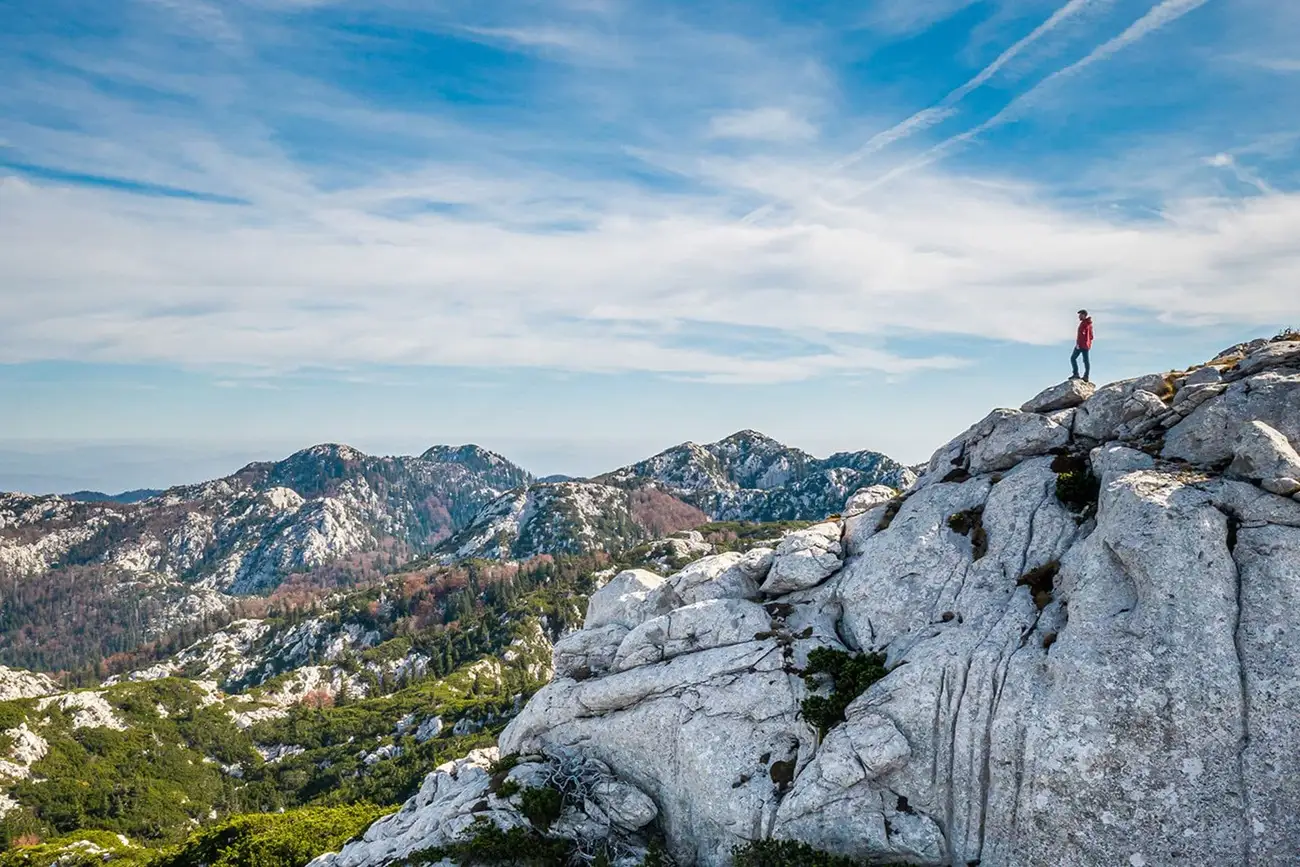
The Premužić Trail, built by forester Ante Premužić in the 1920s and 1930s, crosses the limestone wilderness of Northern Velebit National Park above the Adriatic coast near Senj and Karlobag. A popular day segment runs from the Zavižan saddle toward Veliki Rajinac, offering plateau scenery, dwarf pines, and coastal views, typically taking four to six hours.
Hikers should prepare for unpredictable mountain weather, scarce water sources, and limited signage in fog, carrying maps, GPS tracks, and proper gear. The piece also covers access routes from Zagreb, lodging options in Zavižan and Senj, park entry fees, conservation rules, and answers to common hiker questions about difficulty, views, guides, and family suitability.
Hiking the Premužić Trail: What to Expect on Northern Velebit
Early one May morning I stood at the Zavižan saddle with a thermos of bad coffee and a view that made the drive up worthwhile. The Adriatic lay below like a sheet of hammered tin. Behind me, the karst plateau stretched east toward Lika.
The Premužić Trail is the reason most people come. It runs through the heart of Northern Velebit National Park, a limestone wilderness that rises sharply from the coast near Senj and Karlobag. The trail takes its name from Ante Premužić, the forester who built the stone paths, shelters, and rain cisterns in the 1920s and 1930s so that people could cross the mountain safely. Much of that stonework still carries hikers today.
Choosing a section that fits your legs
The full Premužić route is a long, multi-day traverse. Most visitors, and certainly most day hikers, pick a segment. My favorite is the stretch from Zavižan toward Veliki Rajinac, which gives you the plateau feel without a brutal climb. You walk over pale rock, past dwarf pines, and through meadows where the wind rarely stops.
Plan on about four to six hours for a loop from Zavižan, with a steady ascent of a few hundred meters. The marked paths are red and white, and the park maintains signposts at junctions, though fog can erase them in minutes. Carry a map and a downloaded GPS track. I have watched confident walkers stop at a cairn and look genuinely lost.
Weather, water, and timing
Velebit makes its own weather. A sunny coastal morning can turn into a wind-driven storm on the plateau by early afternoon, and the bora, the cold northeasterly wind, can gust hard enough to knock you sideways. Check the forecast for Senj and for the mountain station at Zavižan before you leave. Pack a windproof shell, a warm layer, water, and food for an emergency night.
Water is scarce. Some of the historic cisterns hold water only after rain, and you should not count on finding any along the way. Bring at least two liters per person for a half-day walk, more in summer. July and August bring heat to the coast and cooler but still exposed conditions up top. Late May, June, September, and October are my preferred months, when the meadows are green and the trails are less crowded.
Panoramic Adriatic views and where to stop
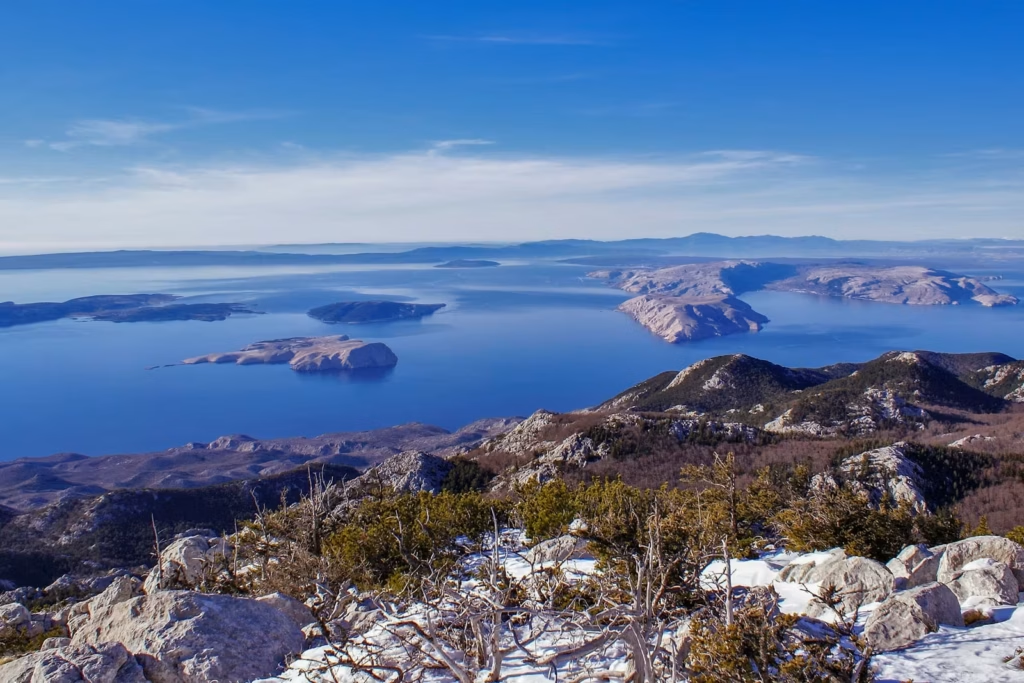
The views are the payoff. On a clear day you can see the islands of Krk, Rab, and Pag stacked in the blue, and far to the south the outline of the Velebit Channel. Sunset from the cliffs above the sea draws photographers every evening in summer.
Do not rush past the Hajdučki kukovi and Štirovača areas, where the karst breaks into sculpted towers and deep sinkholes. Keep a safe distance from cliff edges, because the limestone crumbles without warning, and the drops are long.
Getting There, Staying Over, and Respecting the Park
Most visitors drive. From Zagreb, the trip to Senj takes roughly three hours on the A1 and the coastal road, and the final climb to Zavižan is a narrow, winding road that demands patience. Buses run to Senj and Karlobag, but reaching the mountain from there without a car means a taxi or a pre-arranged transfer. A friend from Zagreb once tried it by bus and spent a full day arranging a lift at the last minute.
The Zavižan mountain lodge offers beds and meals, and it fills quickly in July and August, so book ahead. In Senj, the small guesthouses along the old town waterfront are a good base, and the town has a strong fishing tradition with excellent grilled fish in its konobas. Staying in Senj also lets you start early and avoid the afternoon wind.
Park entry requires a ticket, and the sums change with the season, so check the Northern Velebit visitor center for the current price before you go. Because the park protects strictly regulated karst habitats, stay on marked paths, carry your litter out, and never light fires outside designated spots. Rangers patrol the trails, and they are firm about it.
If you plan to combine your hike with a beach stay, remember that the local tourist tax, boravišna taksa, is charged per night in registered accommodation, so factor it into your budget.
Know Which Protected Area You’re Visiting
Before budgeting for a trip to Velebit, check whether your destination is Northern Velebit National Park or Velebit Nature Park. These are distinct protected areas in Croatia, with different entrances, visitor facilities, and ticket arrangements. The name “Velebit National Park” is often used informally, so confirming the exact site can prevent confusion when looking up admission prices.
Ticket prices may also depend on the entrance, season, visitor category, and whether you choose a single-entry ticket or a multi-day option. Children, students, groups, and other eligible visitors may have different rates, but discounts and proof requirements can change. There is no single reliable price that applies to every Velebit visit.
How to Check Current Ticket Prices
For the most dependable figure, consult the official visitor information for the specific park shortly before travelling. Look for the current price list, opening information, and details about where tickets are sold. If you are visiting Northern Velebit, verify the rules for your planned access point and trail. For destinations elsewhere in the Velebit range, check the relevant managing authority rather than assuming the national park’s ticket covers them.
When contacting a visitor centre, provide your travel date, the number of adults and children, and your intended entrance. Ask whether the quoted amount includes any required permits or services. Keep in mind that access conditions can change because of weather, seasonal operations, or conservation measures.
Budget Beyond the Admission Fee
Admission is only one part of the cost. You may also need to allow for transport to the entrance, parking where applicable, food, accommodation, and guided activities. Mountain routes can be remote, and facilities are not equally available throughout the area. Check trail conditions and bring suitable clothing, water, and navigation essentials.
In short, confirm the exact protected area and date before relying on any quoted Velebit ticket price. Official, up-to-date information is the best way to plan accurately and avoid surprises at the entrance.
Frequently Asked Questions
How hard is the Premužić Trail for an average hiker?
The sections near Zavižan are manageable for anyone with reasonable fitness and good boots. Longer traverses demand real stamina, route-finding skills, and comfort with exposed rock and wind.
Can I see the Adriatic from the trail?
Yes, and the coastal views are the highlight. Visibility depends on haze and cloud, so mornings after a cold front tend to give the clearest picture.
Do I need a guide?
It depends on your experience and the weather. Confident navigators with a GPS track can manage the day sections alone, but a mountain guide is worth hiring for multi-day crossings or winter conditions.
What should I bring that people often forget?
Extra water, a headlamp in case you get caught out, and a warm layer. The temperature on the plateau can fall well below the coastal figure even in summer.
Is the park suitable for children?
Older children who are used to hiking can enjoy the shorter sections, but the drops and exposed ridges call for close supervision. Keep younger kids on the shorter loops near the lodge.