
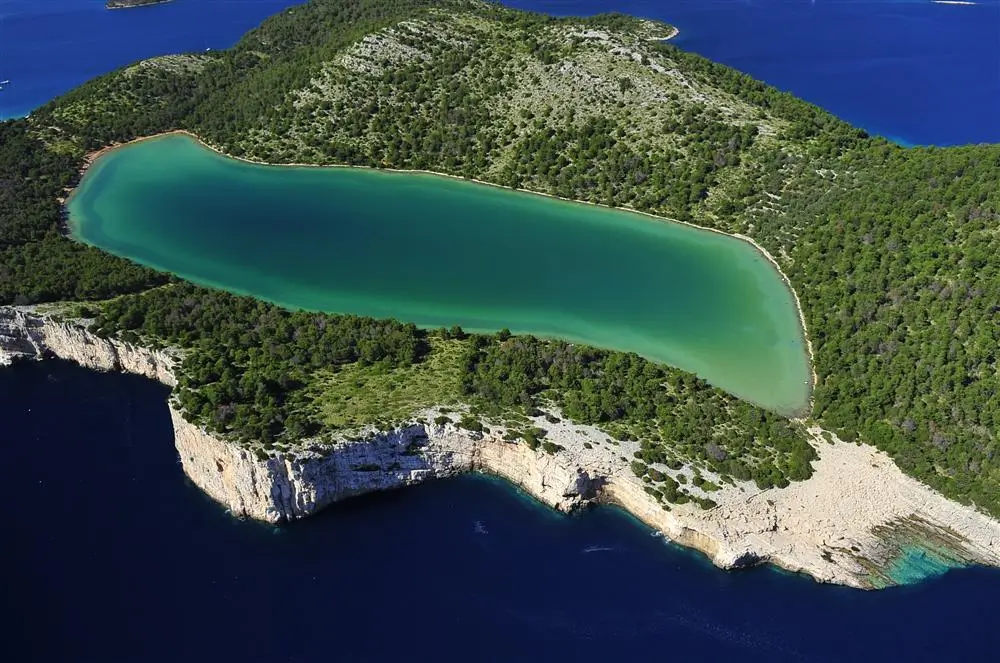
A practical guide to visiting Dugi Otok, an island west of Zadar, in a single day. This guide serves as a perfect resource for your dugi otok day trip, covering reaching the island via the Zadar-Brbinj ferry, driving to Sakarun Beach for its shallow sandbar, visiting the cliffs and lighthouse at Veli Rat, and exploring Telašćica Nature Park with its saltwater lake, Mir.
The guide includes practical advice on parking, costs, timing, and seasonal considerations, noting that shoulder months offer quieter conditions than peak summer. It also addresses transportation without a car for your dugi otok day trip, budgeting cash for the day, suitability for children, and time needed for each stop, along with a reminder to confirm ferry return times in advance.
Dugi Otok in one day: how to reach Sakarun, the cliffs and Telašćica without rushing
This dugi otok day trip will undoubtedly give you a memorable experience of the island’s natural beauty.
Dugi Otok is the long, thin island west of Zadar, and you can see its best three sights in a single day. Start early from Zadar, drive or take a bus to the ferry at Brbinj, and you will reach Sakarun by lunchtime.
I first made this trip in late April, when the island still belonged to locals and cyclists. I had a rental car, a cooler with bread and cheese, and a plan that fell apart within an hour. That is the best way to learn Dugi Otok, so I will give you the plan that actually works.
Getting there and getting around the island
Most visitors take the Zadar to Brbinj car ferry operated by Jadrolinija. Crossings run several times a day, the trip takes around 25 minutes, and fares for a foot passenger sit roughly between 8 and 12 EUR one way, while a car costs considerably more and depends on length and season. Book the car space in July and August, because the last boat in the afternoon fills first.
Once you land at Brbinj, the main road runs south along the island toward Sali, the largest village, and then continues to the western shore. The road is narrow in places, so you will meet tractors and the occasional goat. Driving slowly is not a suggestion; it is the only sensible speed here.
Parking at Sakarun is the first real problem of the day. In July I arrived at 11 in the morning and found the lot full, with cars lined along the verge for nearly a kilometer. Park at the upper area near the path and walk down, and expect to pay a daily fee in cash during peak weeks.
Sakarun Beach: the sand, the shallows and the lunch stop
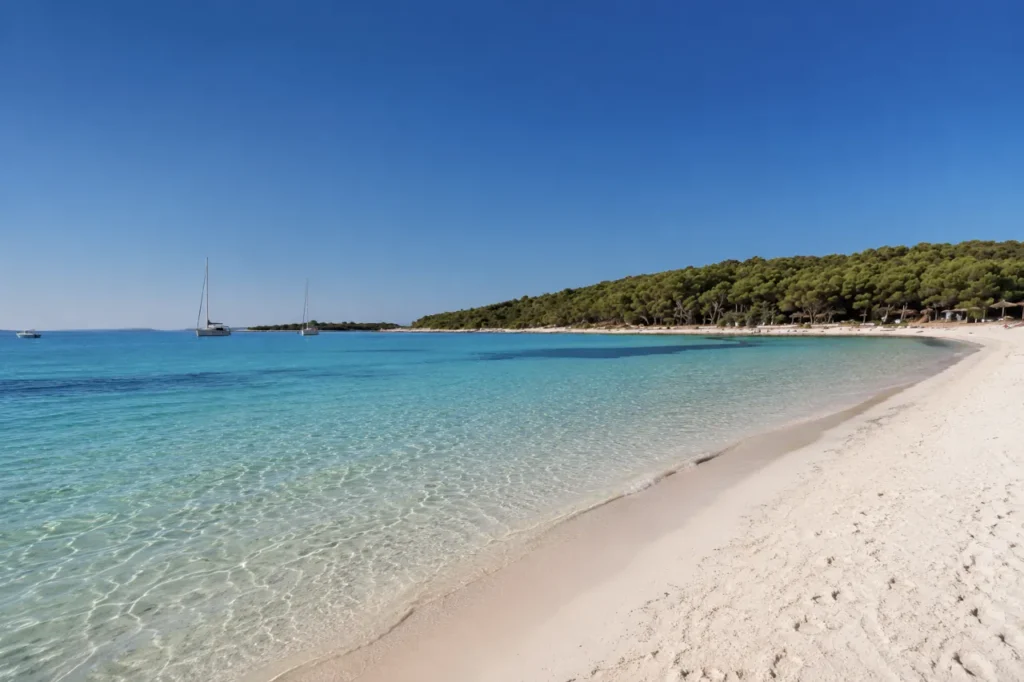
Sakarun is famous for its long shallow sandbar that runs out into the bay, and the water here stays unusually clear and warm. Children can wade a long way out before the water reaches their waist. The sand is fine and pale, although it is mixed with small shells near the edges.
There is a small konoba and a seasonal kiosk near the beach, so you can eat without carrying everything. Ordering grilled fish or octopus salad by the sea is about as Dalmatian as it gets. Prices in peak season run noticeably higher than in the villages, so budget roughly 15 to 25 EUR per person for a simple lunch with a drink.
Shade is limited. Bring your own umbrella or rent a sun bed if the kiosk offers them, and get there before noon if you want a spot near the water. Late afternoon is pleasant too, once the day-trip crowds start leaving for the last ferry.
The cliffs at Veli Rat and the lighthouse road
The western coast of Dugi Otok is a line of high limestone cliffs, and the most dramatic stretch sits near Veli Rat. The lighthouse there stands on a headland that looks out over open sea toward Ist and Silba. A short walk along the cliff top gives you the view without needing any real hiking gear, though sturdy shoes help on the loose stones.
Be careful near the edges. The cliffs drop straight into deep water, and the wind can gust hard, especially in the afternoon when the bora or the maestral picks up. Keep children close and do not sit on the very lip of the rock.
Sunset here is worth planning around. Many people stay on the cliffs until the light turns orange, then drive back toward the ferry in the dusk. Check the last boat time before you commit, because the road is dark and the island roads have no streetlights.
Telašćica Nature Park: the salt lake and the bay of Mir
Telašćica is the reason many people come to Dugi Otok at all. The nature park covers a deep bay system with steep cliffs, pine forest and a large saltwater lake called Mir, which is separated from the sea by a narrow channel. The lake is cooler and calmer than the open sea, and the water is noticeably saltier, which makes floating surprisingly easy.
The park administration charges an entrance fee, and the price varies by season and by what you want to access, so check the official signage at the entrance rather than trusting an old guidebook figure. Boat tours from Sali and Božava also run into the bay and stop at the lake, which is a good option if you lack a car or prefer not to walk.
Walking the trails inside the park takes a couple of hours if you want to see the lookouts and the bay. Wear closed shoes, carry more water than you think you need, and avoid midday in summer when the rock radiates heat. Swimming in the bay is allowed from marked areas, and the sea floor drops quickly, so a wetsuit is unnecessary but water shoes help on the rocks.
Practical tips for your day
Pack light but sensibly: water, sunscreen, a towel, cash for parking and small kiosks, and a card for larger restaurants. Mobile signal fades in the more remote bays, so download offline maps before the ferry. Tourist tax, called boravišna taksa, applies only to overnight stays, so a day trip usually does not trigger it, but a longer stay on the island does.
Shoulder seasons work best. May, June and September give warm water, quieter beaches and easier parking than the peak weeks of July and August. Early October is still warm enough for swimming and far calmer than summer.
Frequently asked questions
Can I visit Dugi Otok in one day without a car?
Yes, but it depends on your plans. Public buses link Brbinj with Sali and some beach stops, though the timetable is thin outside summer. If you want to reach Sakarun, the cliffs and Telašćica in one day, a rental car or a guided boat tour makes the schedule far easier to keep.
How much cash should I bring for the day?
Plan on about 60 to 100 EUR per person including the ferry, park entrance, parking and a simple lunch. Many small konobas and kiosks take cards now, but parking attendants at Sakarun often prefer cash, so keep some small notes in your pocket.
Is Sakarun suitable for small children?
Very much so. The shallow sandbar lets children wade far out safely, and the water stays warm through early autumn. Bring water shoes for the rocky sections near the edge of the beach.
How long do I need inside Telašćica?
Give yourself at least three hours if you plan to walk a trail, swim in the lake and eat lunch. A boat tour covers the highlights in about two hours, but you will see less of the cliffs and forest that make the park memorable.
When is the last ferry back to Zadar?
The last afternoon departure from Brbinj changes by season, so check the Jadrolinija timetable the day before you travel. Missing it means an expensive taxi or an overnight stay, so build a safety margin into your return plan.