
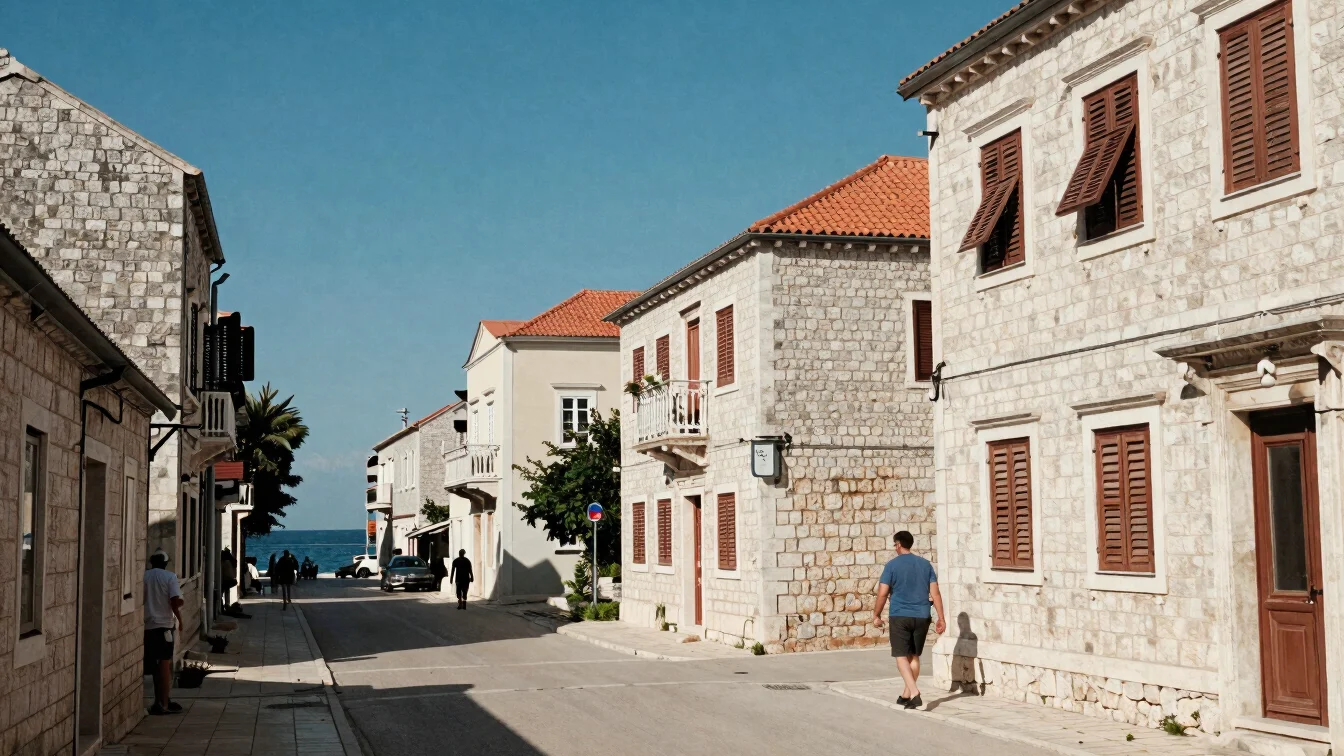
Renovating an old stone house in coastal Croatia in 2026 typically costs €600 to €1,200 per square metre for full quality work, with basic repairs starting at €150 and structural reinforcement adding more. Labour comprises 40 to 50 percent of costs, and prices vary by location and site accessibility.
Beyond construction, owners must budget for design fees, permits, utility connections, and energy certificates. Paperwork, including land registry checks, cadastre registration, heritage approvals, and obtaining an OIB number, can significantly extend timelines. Preserving original materials and sequencing structural work before interiors helps control costs without compromising quality.
If you are holding the keys to an old stone house in Dalmatia, Istria or the Kvarner islands, expect to budget between €600 and €1,200 per square metre for a full, quality renovation in 2026, with major structural jobs pushing the figure higher. Cosmetic work costs far less. The real surprises usually come from the walls, the roof and the paperwork, so that is where to focus first.
What a Realistic Budget Looks Like in 2026
Prices vary by micro-location. A stone house in a village behind Makarska or near Motovun will cost less to work on than a Hvar or Korčula property, where skilled masons and materials must be brought in by ferry. Labour is the largest single expense, often 40 to 50 percent of the total.
| Work category | Estimated cost (2026, EUR per m²) |
| Basic repair (roof patch, plaster, electrics check) | 150 to 300 |
| Medium renovation (new roof, windows, plumbing, wiring) | 400 to 700 |
| Full renovation (structural repair, insulation, interiors, bathrooms) | 700 to 1,200 |
| Structural reinforcement (lintels, foundations, wall ties) | Add 150 to 350 |
Add a contingency of at least 15 percent. Stone houses hide problems behind the plaster, and almost every owner finds one.
The Costs People Forget
- Design and project documentation: an architect or licensed designer typically charges 5 to 8 percent of construction value.
- Building permit (građevinska dozvola or potvrda o građevinskoj dozvoli, depending on scope): fees vary by municipality, but expect several hundred to a few thousand euros.
- Utility connections: water, sewage and electricity hookups can add thousands if the house is off the grid.
- Transport and access: narrow stone lanes limit truck access, so materials may need manual carrying or a small crane, which raises the bill.
- Energy certificate (energetski certifikat): required for many transactions and some permits.
Paperwork Before the First Stone Is Moved
Croatian renovation projects move slowly if the paperwork is not in order. Check the land registry extract (zemljišnoknjižni izvadak) and confirm that the building is properly registered in the cadastre (katastar). Many old houses have a mismatch between the registered footprint and what actually stands on the plot.
If the property is in a protected area, such as a Kvarner or Istrian heritage zone or a national park buffer, the Conservation Department (Konzervatorski odjel) must approve the plans. This can add months. Budget time as carefully as money.
You will also need an OIB, the personal identification number, to contract workers, open bank accounts and pay fees. Foreign buyers should arrange this early.
Saving Money Without Cutting Corners
Some choices lower costs without damaging the house. Keep the original stone and lime mortar where possible, since repointing with cement often traps moisture and causes long-term damage. Source local stone from a quarry near the site rather than importing it. Reuse existing floor tiles, beams and doors, which local salvage yards sell at a fraction of new prices.
Do the structural and roof work first, then interiors. Waiting for the roof to fail while you spend on kitchens is the most expensive mistake owners make.
Frequently Asked Questions
How long does a full renovation of a stone house take?
Plan on 12 to 24 months from design to completion. Permits, heritage approvals and the availability of skilled masons often set the pace more than the building work itself.
Can I live in the house during renovation?
Usually not during structural work. Many owners stay in the property during cosmetic upgrades, but dust, noise and open walls make full renovation difficult to live through.
Is it cheaper to renovate or to build new?
Renovation is often more expensive per square metre, but the result can be worth it in a heritage location where new construction is restricted or unavailable. Check local zoning before you decide.