
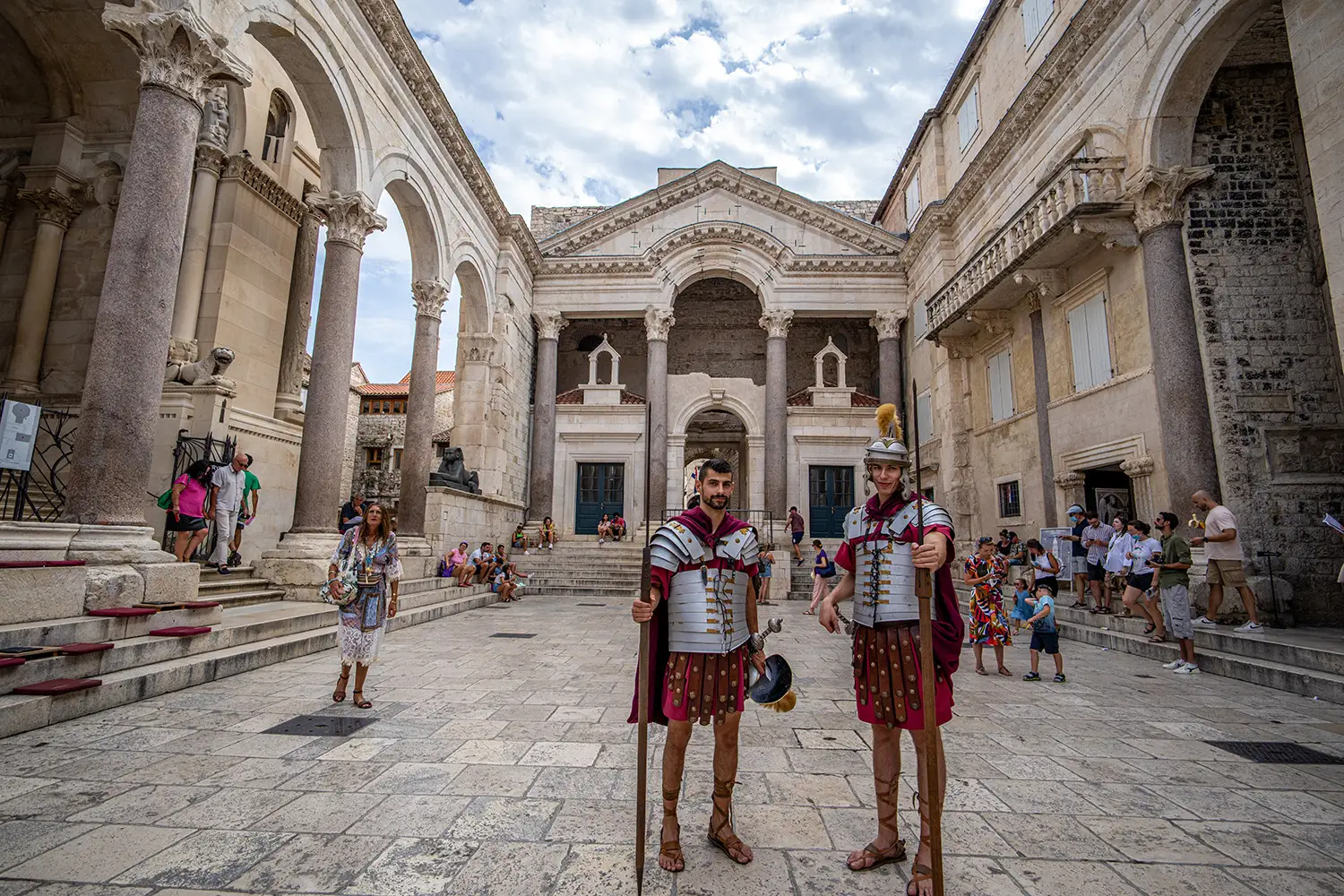
This guide describes a self-guided walking tour of Diocletian’s Palace in Split, Croatia, noting that the complex is free to explore except for the underground cellars, cathedral tower, and some museums. Built for the retired Roman emperor around 297-305 AD, the palace remains inhabited by roughly 3,000 residents today.
The route covers key landmarks including the Golden Gate, Peristil square, Cathedral of Saint Domnius, Temple of Jupiter, and the Riva waterfront promenade. Practical advice addresses timing to avoid crowds, appropriate footwear, visit duration, and accessibility considerations, along with answers to common visitor questions about tickets, hours, and seasonal conditions.
Starting Inside the Walls: How to Enter Diocletian’s Palace
Split’s Diocletian’s Palace is free to wander. You can walk through its gates at any hour and nobody will ask for a ticket. Only the underground cellars and a few museum spaces charge admission.
I learned this the hard way on a spring recce trip, when I stood at the Golden Gate at eight in the morning with a paper map and a ticket I did not need. The stone is worn smooth. The air smells of sea salt and coffee from the cafés on the Peristil.
The palace was built around 297 to 305 AD for the retired emperor Diocletian, who wanted a seaside home with the comforts of a military camp. Its walls still enclose roughly 30,000 square metres, and today about 3,000 people live inside them. That is the detail that surprises most visitors. This is not a ruin sealed off from daily life. People hang laundry from their balconies, and children kick balls against the cathedral steps.
The Route, Gate by Gate
Start at the Golden Gate on the north side. Walk south along the Decumanus, the main east-west street that once ran straight through the camp. Shops now sell lavender soap, sunscreen, and mass-produced amber, so you will pass more souvenir stalls than Roman columns in the first ten minutes.
Turn left at the Vestibule, a domed hall that once served as an entrance and later as a reception room. Its acoustics are excellent, and a short hum from a visitor will echo back for several seconds. Then step into the Peristil, the colonnaded square at the heart of the palace. Sphinxes stand near the entrance to the mausoleum, which was converted into the Cathedral of Saint Domnius. The bell tower beside it is the best climb in the complex, though the stairs are narrow and steep.
Take a moment in the Peristil before moving on. Late afternoon light turns the columns amber, and the musicians who play here in summer make the square feel like a stage set.
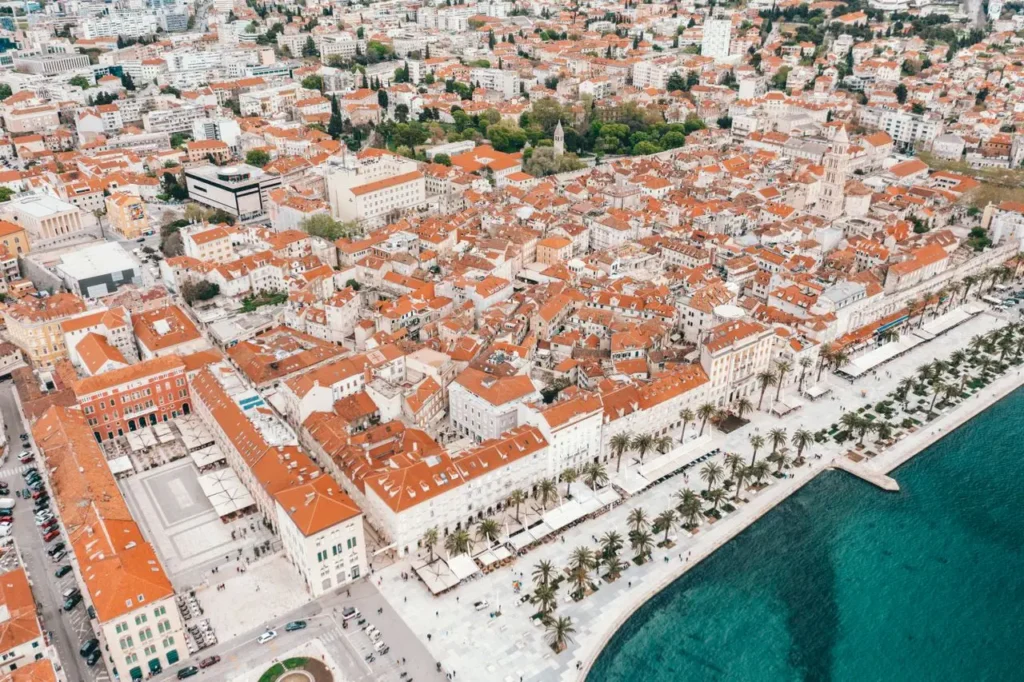
The Cellars, the Temple, and the Waterfront
The Substructures, the vast vaulted cellars under the palace, are the most atmospheric part of the visit. They were used for storage in Diocletian’s time, and their scale makes the rest of the palace feel almost modest. Admission costs roughly 10 to 15 EUR depending on the season, and prices change, so check the entrance board on the day. Going in July? Arrive before ten or after six, because the queue along the Riva can stretch past the fountain.
From the Peristil, head east to the Temple of Jupiter, a small domed building that now serves as a baptistery for the cathedral. Climbing the cathedral tower gives you the best view of the old town roofs, the marina, and the islands beyond.
Finish on the Riva, the seafront promenade just outside the Sea Gate. Sit at a konoba-style café, order a black coffee, and watch the ferries come in. This is where locals actually spend their evenings, and it is the best way to close a palace walk.
Practical Tips From Someone Who Walks It Often
Wear shoes with grip. The limestone and marble paving becomes slippery after rain, and some sections dip steeply near the old gates. Bring water, because the palace has few fountains and the sun reflects hard off the stone from May through September.
Plan about two hours for a relaxed walk, or half a day if you want the cellars, the cathedral tower, and a museum stop. Mornings are quieter, and you will meet the cleaners and the bakers before the cruise groups arrive. Evenings bring the best light.
If you are staying in the old town, you can walk the whole route without a map. The streets are short, and the palace is compact enough that you cannot seriously get lost.
Frequently Asked Questions
Do I need a ticket to walk around Diocletian’s Palace?
No. The streets, squares, and the Peristil are open to everyone at no cost. You pay only for the Substructures, the cathedral tower, and certain museum areas, and those prices shift with the season.
How long should I set aside for the tour?
Two hours covers the main sights at a comfortable pace. Add an hour if you plan to climb the bell tower and another if you visit the cellars, which are cool and worth lingering in on a hot day.
Is the palace accessible for wheelchairs or strollers?
It depends on the route you choose. The main streets and the Peristil are mostly flat, but several gates and the cellars involve steps or uneven stone. The Riva is the easiest stretch for strollers.
When is the best time to visit to avoid crowds?
Early morning before nine, and the last hour before sunset. Midday in July and August brings the heaviest cruise-ship crowds, especially on days when two or three large ships dock in the port.
Can I visit the palace in the evening?
Yes, and it is one of the most rewarding times to go. The stone holds the day’s warmth, the cafés fill up on the Riva, and the Peristil often hosts concerts in summer. Some indoor sites close earlier, so check the closing time of the cellars before you set off.
📅 Last updated: