
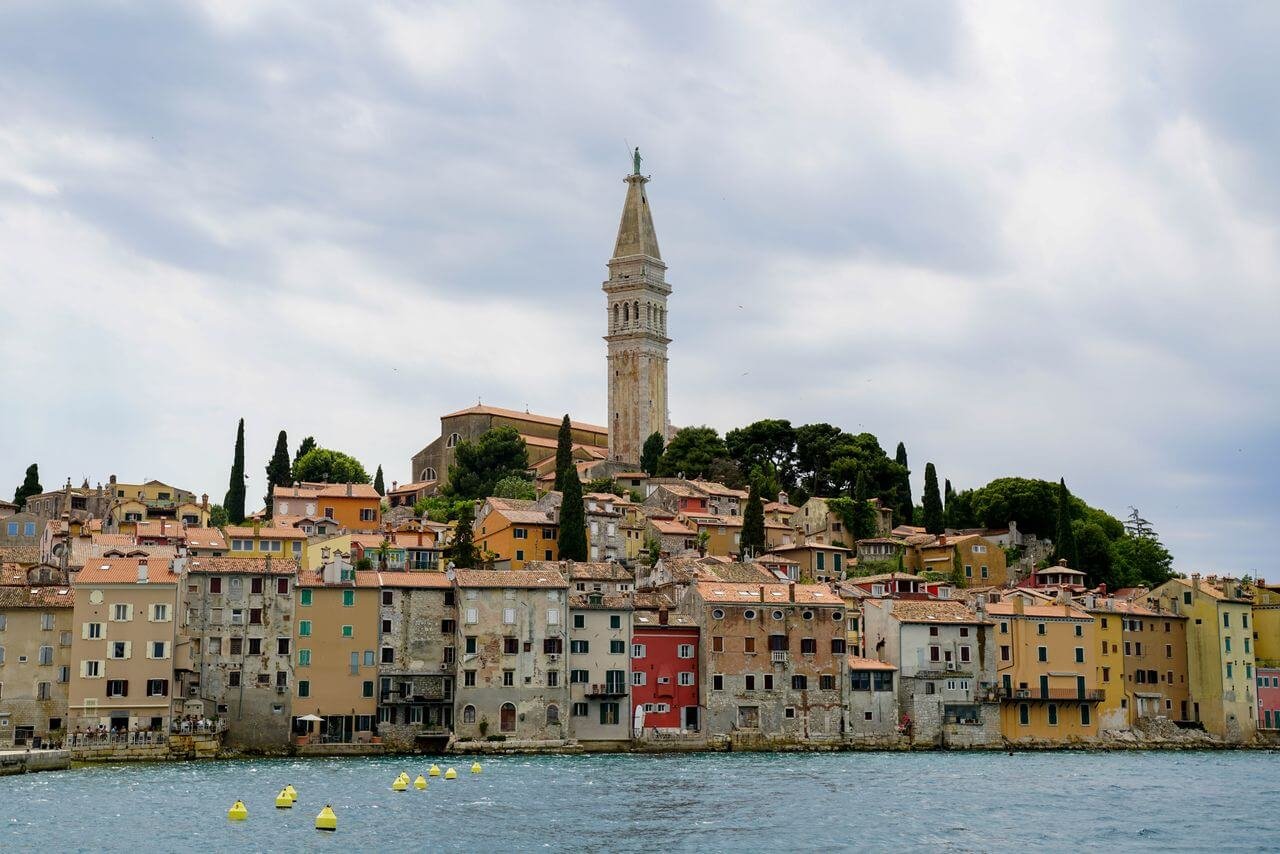
This guide describes Rovinj’s historic peninsula, highlighting its Venetian-era lanes, harbor, St. Euphemia’s Basilica, and nearby attractions like Balbi’s Arch and the Batana House. It covers coastal swimming spots, including Punta Corrente, stone bathing platforms, and boat excursions to nearby islands, noting that beaches are mostly rocky rather than sandy.
The guide also addresses Istrian cuisine, featuring seafood, olive oil, truffles, and local wines, along with dining options ranging from harbor-side restaurants to quieter countryside meals. It offers a sample itinerary, seasonal considerations for visiting, practical walking tips, and answers to frequently asked questions about timing, accessibility, and activities.
Rovinj’s historic peninsula is the natural starting point for exploring the town. Its compact streets preserve the atmosphere of a former Venetian port, while the waterfront offers an immediate sense of how daily life still revolves around the harbor. Set aside time to explore on foot: steep, narrow lanes climb between pastel-colored houses, opening onto small squares, quiet courtyards, and glimpses of the Adriatic. Harbor-front streets are especially lively, with fishing boats, cafés, and restaurants lining the water.
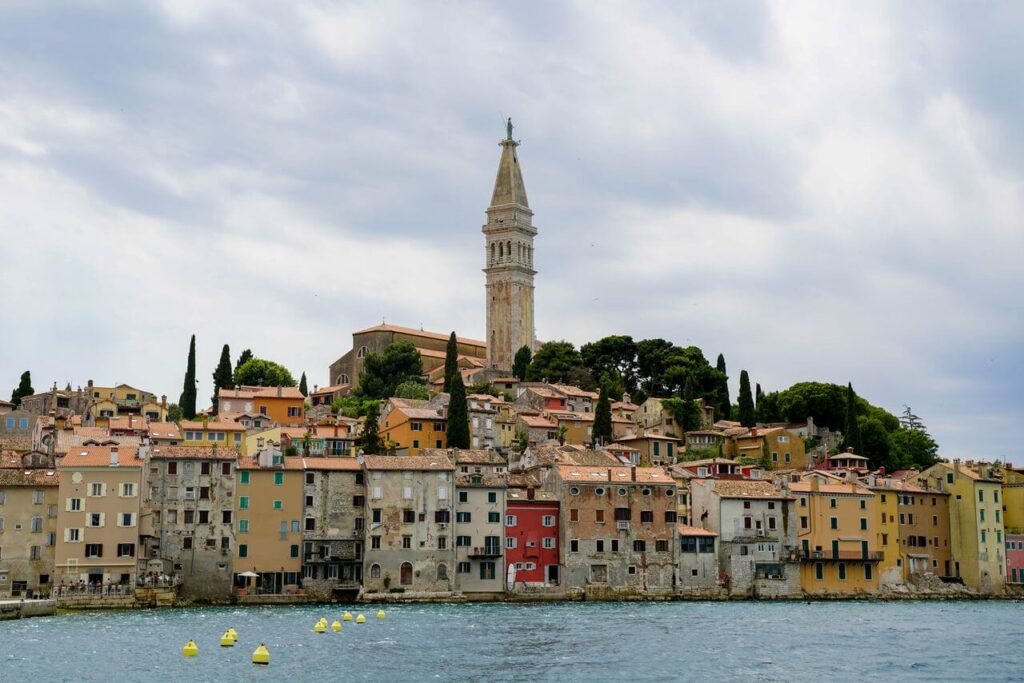
At the peninsula’s highest point stands St. Euphemia’s Basilica, Rovinj’s most prominent landmark. Its hilltop position makes the church visible from across the town, and climbing the bell tower rewards visitors with wide views over red rooftops, the harbor, and nearby islands. The basilica is dedicated to the town’s patron saint, whose story is closely woven into local tradition: according to legend, her sarcophagus arrived mysteriously by sea in the early ninth century. The church and its setting help explain why the old town’s lanes seem to lead naturally uphill toward the tower.
Other stops add detail to a leisurely walk. Pass through Balbi’s Arch, once an entrance to the walled town, then browse the old harbor, small galleries, and artisan shops tucked along the lanes. The Batana House eco-museum introduces the batana, a traditional wooden fishing boat, and the maritime culture that shaped Rovinj’s community. Rather than treating these sights as a checklist, pause in a square or follow an appealing side street; unplanned detours are part of the experience. Wear comfortable shoes, since paving can be uneven and stairs are common. Crowds build during peak hours, so an early visit or a walk near sunset offers a calmer atmosphere and softer light for the harbor and rooftops.
Rovinj’s coastline offers inviting places to swim, but visitors should not expect long stretches of soft sand. Much of the shore is rocky or edged with smooth stone platforms, where clear water makes it easy to see the seabed. Water shoes can make getting in and out more comfortable, especially on uneven surfaces. Bring a towel or beach mat, and check access points before settling in, as some coves are reached by steps or narrow paths.
For a mix of greenery and swimming, head to Punta Corrente, also known as Golden Cape. This forested park south of the old town has shaded walking and cycling routes, rocky coves and open spots beside the sea. It is a scenic place to spend a few hours moving between the trees and the water. Arriving earlier in the day can help you find a quieter patch of shade during busy summer periods.
Boat excursions visit islands in the Rovinj archipelago, including St. Catherine and the Red Island area. Depending on the trip, you may get coastal views, time for a swim or a sunset ride along the shore. Departure points and timetables can vary by operator and season, so confirm where to board and when boats run before making plans. Some services are more frequent in summer than in the shoulder season.
Active visitors can snorkel along rocky stretches, kayak around sheltered sections of coast or cycle through Punta Corrente. Choose calm conditions for paddling, keep clear of marked swimming areas and avoid disturbing wildlife or fragile coastal vegetation. A few options by feel: Punta Corrente suits shaded walks, cycling and coves; the town’s stone bathing platforms are convenient for a quick swim near the center; and an island boat trip offers wider sea views with the possibility of a swimming stop. These are mostly natural, stony shores, so plan for a different experience from a broad sandy beach.
Food is one of the most rewarding ways to understand Rovinj and the wider Istrian region. Look for fresh Adriatic seafood, including grilled fish and shellfish, but remember that catches and menus change with the season. Ask what has arrived that day rather than assuming a particular dish will be available year-round. Istrian olive oil often appears at the table, while truffles are a seasonal specialty, most closely associated with autumn. Regional wines such as Malvasia pair naturally with local cooking; many restaurants can suggest a suitable glass or bottle.
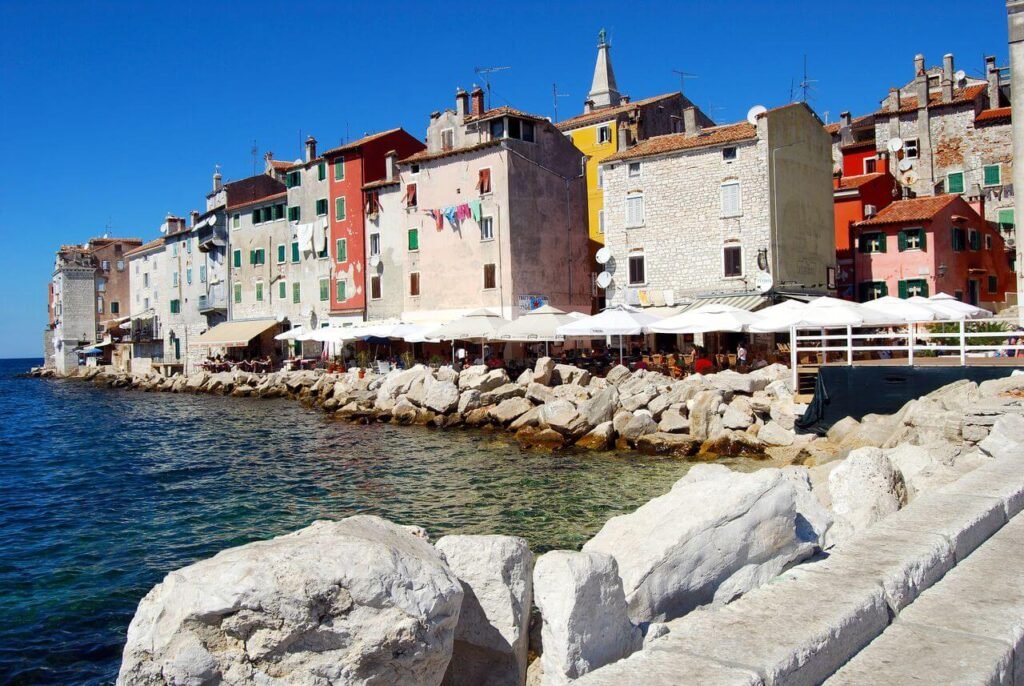
Where you eat shapes the experience. A harbor-side restaurant offers views across the boats and waterfront, making it an appealing choice for a leisurely meal, though popular spots can be busy and prices may reflect the location. For a quieter atmosphere, explore the lanes of the old town or head into the surrounding countryside, where a meal can feel more relaxed and connected to local produce. Check menus before settling in, and ask staff about seasonal catches and specialties. During high season, reserve well ahead at sought-after restaurants, while leaving room in your plans for smaller places recommended by residents.
For a glimpse of everyday food culture, visit Rovinj’s daily market. Browse the local produce, then pick up fruit, cheese, bread, or other picnic ingredients to enjoy by the water or on an outing. Local traditions are also visible beyond the table. The Batana House introduces visitors to the traditional wooden fishing boat and the maritime heritage that shaped the town. Independent galleries offer another way to encounter Rovinj’s creative life, often showcasing artists connected to the region. Check the calendar for local festivals and cultural events during your stay; dates vary, so attendance depends on timing. Combining these experiences with meals in different settings gives a fuller sense of the town than relying only on famous addresses or a single signature dish.
A little planning helps you enjoy Rovinj’s highlights without rushing. Begin in the old town in the cooler morning hours, when the narrow lanes and waterfront are quieter. Leave time to climb toward St. Euphemia’s Church, browse local shops, and stop for coffee. Pause for lunch near the harbor or in the old town, then spend the afternoon swimming along the coast or walking the shaded paths of Punta Corrente. Return to the harbor before sunset for a waterfront stroll and dinner.
If you have a second day, consider a boat trip to nearby islands or set aside more time for a leisurely meal in the countryside. An extra day also makes it easier to balance sightseeing with swimming and unhurried breaks.
Summer brings warm water, long days, and the widest choice of restaurants and excursions, but it is also the busiest period. Book accommodation and popular boat trips ahead, and expect crowded lanes and beaches. Spring and early autumn are generally calmer and comfortable for walking; however, the sea may be cooler, and some seasonal services or excursions may operate less frequently or close. Check schedules locally, particularly outside peak summer.
Rovinj’s historic center is best explored on foot: its lanes are compact, and some are steep or uneven. Cars are generally kept outside or at the edges of the old town. Confirm current access restrictions, parking locations, and fees before arrival, as rules can change. Wear comfortable shoes and bring water in warm weather.
Frequently asked questions
When is the best time to visit? Choose summer for warm swimming and full services; visit in spring or early autumn for fewer crowds and milder walks.
Is Rovinj walkable? Yes. The center is pedestrian-friendly, though expect cobbles, slopes, and steps.
Are the beaches sandy? Most swimming spots are rocky, pebbly, or paved, so water shoes can help.
How long should I stay? One day covers the main sights; two days allow a boat trip or a slower pace.
Are boat trips worthwhile? They can be, especially for island scenery and swimming; compare routes, durations, and seasonal schedules before booking.
📅 Last updated: