
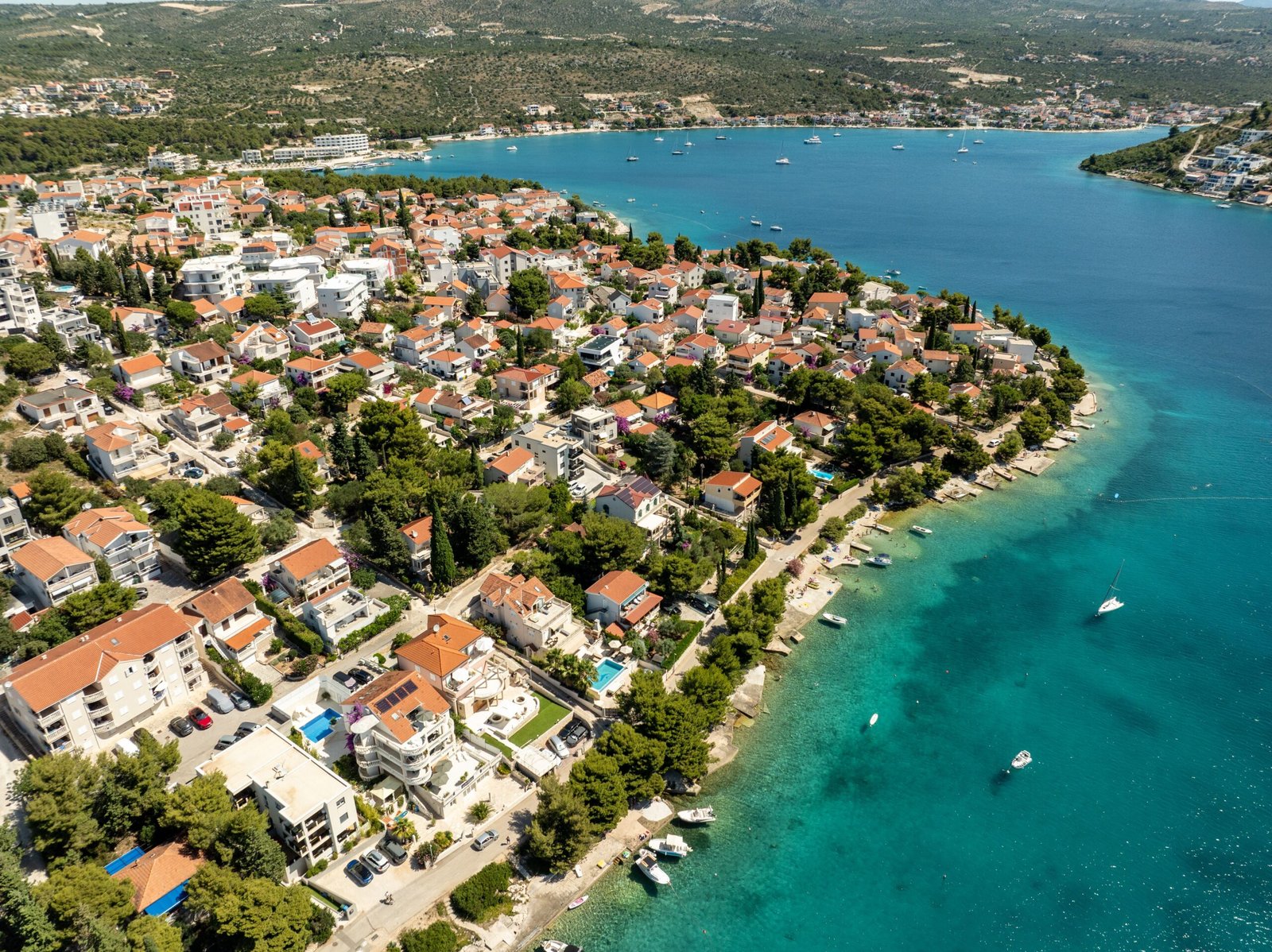
Waterfront land near Šibenik, Croatia, including areas like Vodice, Tribunj, Jadrtovac and nearby islands, is considered a valuable but complex investment. Demand remains strong due to proximity to Krka National Park and the Kornati archipelago, though returns depend heavily on legal status, coastal zoning, and build permits.
Buyers must verify land registry details, check whether plots fall within the public coastal zone or require concessions, and confirm spatial plan designations before purchase. Foreign buyers need an OIB number, and property transfer tax is typically 3 percent. Land with secured building rights and strong tourist demand offers the best long-term investment potential.
Waterfront land in the Šibenik area is one of the rarer and more valuable parcels on the Croatian Adriatic. Plots with direct sea access or a short walk to the water, especially near Vodice, Tribunj, Jadrtovac and the Dalmatian islands reachable from Šibenik harbour, tend to hold their value and attract steady demand from foreign buyers and domestic holiday-home seekers. The short answer: yes, it can be a strong investment, but only if you verify the legal status of the land, understand coastal rules, and buy with realistic expectations about build permits.
Why Šibenik Waterfront Land Attracts Investors
Šibenik sits in the middle of the Dalmatian coast, close to the Krka National Park and the Kornati archipelago. That combination of protected nature and fast access to the sea keeps demand high year after year. Locals often say the city has the feel of a working port rather than a resort, which many buyers actually prefer.
Tourism here is strong but spread across the season. The shoulder months of May, June and September bring a steady flow of visitors, which supports rental income for any property that eventually gets built.
Micro-Locations Worth Knowing
Not all waterfront is equal. Within the Šibenik area, a few micro-locations stand out:
- Vodice and Tribunj: Established resort towns with good infrastructure, strong summer rental demand and a mix of small marinas and quiet coves.
- Jadrija and Brodarica: Quieter, more residential, popular with families and long-term owners.
- Island plots near Šibenik: Scarce and expensive, with higher resale appeal but tougher access for construction materials and utilities.
- Rural coastal villages: Lower prices, more space, but longer distances to services and a slower rise in value.
Legal Checks Before You Buy
Coastal land in Croatia has layers of regulation that catch many foreign buyers off guard. Before signing anything, you need to confirm several points.
Land Registry and Ownership
Always check the land registry extract (zemljišnoknjižni izvadak) at the competent municipal court. Confirm the registered owner, any mortgages, easements and pending entries. If the plot is not properly registered, you may need a formal uknjižba process, which can take months.
Coastal Zone and Concessions
The first 100 metres from the sea are generally public domain under the Maritime Domain and Seaports Act. Land directly on the shoreline may be subject to a coastal concession (koncesija) rather than full ownership. A concession grants usage rights for a fixed period, which affects both price and future value. Ask specifically whether the plot is privately owned, partly public, or under concession.
Building Permits and Spatial Plans
A plot being waterfront does not mean it can be built on. Check the local spatial plan (prostorni plan) for the municipality. Look for whether the land is designated for residential, tourist, agricultural or protected use. Agricultural land (poljoprivredno zemljište) can sometimes be converted, but the process is slow and uncertain. Protected areas near Krka or the Kornati zone have especially strict limits.
Tax and Foreign Buyer Formalities
Foreign buyers need an OIB (personal identification number) before completing the purchase. Property transfer tax is generally 3 percent of the purchase price, though this can vary and should be confirmed with a notary. Notarised contracts are the norm, and a local lawyer experienced in real estate is worth the cost.
Comparing Investment Scenarios
The right approach depends on your goals. The table below gives a broad comparison.
| Plot Type | Entry Cost | Build Potential | Liquidity |
| Ready building land, sea view, Vodice area | High | Good, if permit confirmed | Strong |
| Coastal plot with concession | Medium | Limited | Moderate |
| Agricultural plot near the coast (OPG context) | Low to medium | Uncertain, slow conversion | Weak |
| Island or remote cove plot | Very high | Complex logistics | Niche but strong |
Practical Steps Before Committing
- Request the land registry extract and check for encumbrances.
- Obtain the spatial plan designation from the municipality.
- Confirm whether any part of the plot falls in the public coastal zone.
- Ask for a written building feasibility opinion (urbanistički uvjeti).
- Hire a notary and a local lawyer before any deposit is paid.
- Budget for utilities connection, which can be costly on remote sites.
Frequently Asked Questions
Can foreigners buy waterfront land in Croatia?
Yes, citizens of EU countries can buy property freely. Non-EU buyers generally need reciprocity conditions to be met, so confirm your status with a lawyer before proceeding.
Is all land along the Šibenik coast private?
No. The first 100 metres from the sea are generally public domain, and some shoreline areas are held under coastal concessions. Always verify the exact status of the plot.
Is waterfront land a good long-term investment?
It can be, particularly where a building permit is secured and the location has strong tourist demand. Land without build rights carries significant risk and usually performs far more modestly.