
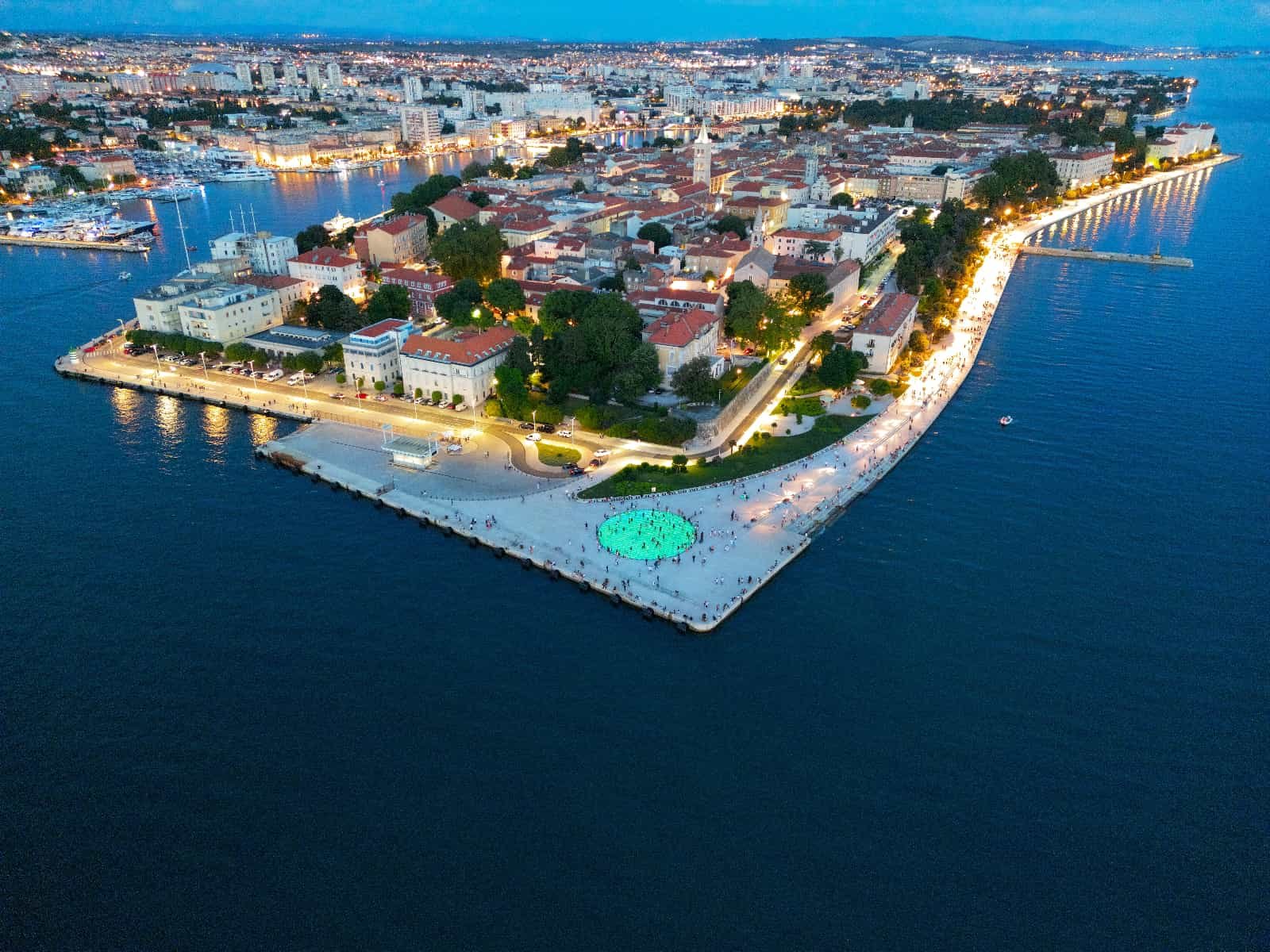
Zadar’s Real Estate market is still rising in 2026, driven by steady foreign buyer demand, improved air links, and a tight supply of sea-view apartments in the old town and the coastal suburbs. If you are considering buying, the short answer is that prices remain high but liquidity is strong, so careful micro-location choice and paperwork matter more than timing the market.
Why Zadar Is Attracting Buyers Right Now
Zadar has long been the quieter sibling of Split and Dubrovnik. That reputation is changing. The city offers a compact historic core, the Sea Organ and Greeting to the Sun by Nikola Bašić, a functioning university, and a ferry network to the islands that runs almost year-round.
Three forces are pushing demand up at the same time.
- Remote work and long stays. Many buyers from Germany, Austria, the UK and the Nordic countries now treat Zadar as a base for several months a year, not just a summer rental.
- Airport growth. Zadar Airport (ZAD) has added routes in recent seasons, which shortens the trip for buyers flying in from Western Europe.
- Limited new supply. Building land near the sea is scarce, and construction permits in protected zones take time. Existing apartments with a view are becoming the real asset.
The result is a market where well-located older stock sells quickly, and newer developments in outer districts see more price negotiation.
Where to Buy: Micro-Locations That Hold Value
Zadar is not one market. A flat on the peninsula can cost twice as much per square metre as one three kilometres inland. Knowing the difference saves money.
| Area | Character | Buyer profile |
| Old Town (Stari grad) | Historic, walkable, limited parking, high rental demand | Investors, short-term rental operators |
| Peninsula and Borik | Beaches, hotels, promenades, premium sea views | Lifestyle buyers, second homes |
| Diklo and Petrčane | Residential, quieter, close to the sea | Families, long-term residents |
| Ploče and Arbanasi | Mixed, more local life, better value | Budget-conscious buyers, first-time owners |
Check Before You Commit
Ask the seller for the land registry extract (zemljišnoknjižni izvadak) and confirm that the property is fully registered in the cadastre. Many older flats in Zadar still have gaps between the physical building and the registered records, which can delay a sale or a later renovation permit.
Buying Process, Costs and Tax Essentials
The process is straightforward once you understand the local steps. Foreign buyers need an OIB (personal identification number) before signing anything. You can obtain one at the Croatian Tax Administration or through a licensed representative.
- OIB number: Required for the purchase contract and the bank account.
- Notary involvement: The sales contract is typically notarised, and ownership is transferred through entry in the land registry (uknjižba).
- Property transfer tax: Currently around 3 percent of the declared value, usually paid by the buyer.
- Notary and registry fees: Add a modest percentage on top, depending on the transaction size.
- Agency commission: Often 3 to 5 percent, sometimes split between buyer and seller.
Budget for roughly 8 to 10 percent above the purchase price to cover transfer tax, notary, registry entry and legal review. Those numbers can shift with regulation, so confirm the current rates with a local notary or lawyer.
Renting Out Your Property
If you plan short-term letting, register the property with the local tourist board and pay the tourist tax, which the city collects from guests. Coastal properties may also fall under rules about concessions for beach-adjacent land. Always check whether your flat sits within a regulated zone before buying for rental income.
Frequently Asked Questions
Is Zadar property still a good investment in 2026?
It can be, particularly for well-located older apartments with sea views and strong rental demand. Returns depend heavily on location and how you manage the property.
Can foreigners buy property in Croatia without restrictions?
Citizens of EU and EEA countries can buy property with the same rights as Croatian citizens. Non-EU buyers should confirm the current conditions with a lawyer before proceeding.
How long does the purchase take?
A straightforward transaction often takes between one and three months, mostly due to document gathering, OIB registration and the land registry process.
Do I need a local bank account?
It is strongly recommended. A Croatian account simplifies paying utilities, taxes and the property transfer costs.
Which area of Zadar is best for a first purchase?
Ploče, Arbanasi and parts of Diklo often offer a balance of price, access to the sea and everyday amenities, which suits first-time owners well.
📅 Last updated: