
The guide describes the Jadranska Magistrala, Croatia’s old coastal highway running from Rijeka through Zadar, Split, and Makarska toward Dubrovnik, based on a spring road trip. It covers the route’s scenery, including the Velebit foothills and the Split-Makarska stretch, plus practical advice on speed, fuel, signal coverage, and tolls.
The summary addresses seasonal timing, recommending May-June or September-October over crowded summer months, and suggests overnight stops in towns like Korčula or Trogir alongside local konobas. A FAQ section answers common questions about driving difficulty, trip duration, winter conditions, tolls, and choosing between driving and ferry travel to the islands.
Driving the Magistrala: Scenic Coastal Road Trip Guide
The Magistrala is the old coastal highway that stitches together most of Croatia’s Adriatic shoreline. If you want to see the sea from the car window, this is the road to take.
I drove the full length of it during a spring recce trip for a client from Zagreb who wanted a second home near Makarska. We left at seven in the morning. Nobody was on the road, and the light over the islands was something I still think about.
Where the Road Runs and What You See
The Magistrala follows the coast from Rijeka down past Zadar, Šibenik, Split, and Makarska toward Dubrovnik, though much of the southern stretch now runs on the newer A1 motorway inland. Locals still call the coastal route the Magistrala, and the signs saying “Stara cesta” or the old road will lead you onto it. Keep that word in mind when you use a navigation app, because the app will often try to send you onto the faster tunnels and bridges instead.
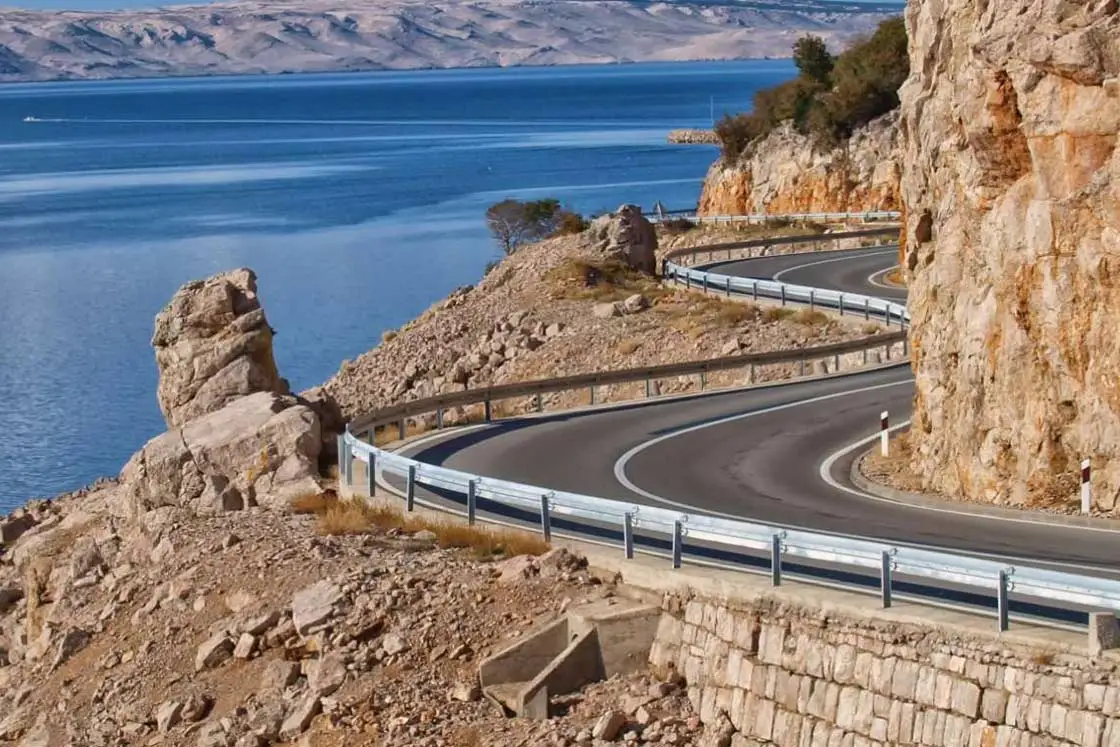
Between Senj and Karlobag the road climbs over the Velebit foothills, with the Velebit channel opening on your left. Further south, near Omiš, the road squeezes between the Dinara mountains and the water, and the Cetina river mouth appears in a sudden burst of green. You will stop a dozen times without meaning to.
The Dalmatian Stretch Between Split and Makarska
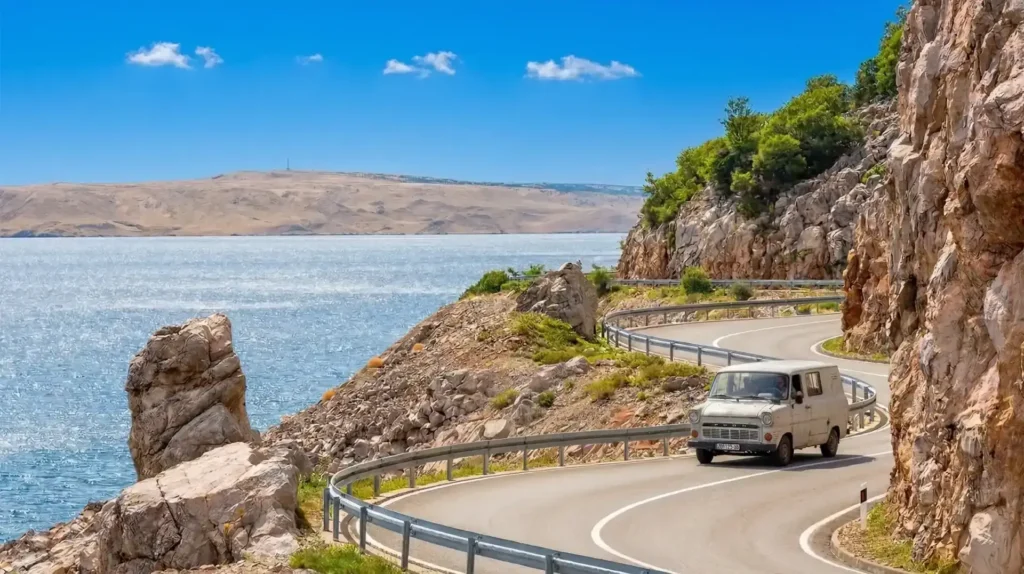
This section is the one most visitors remember. The road hugs the cliffs past Stobreč, then bends through Podstrana and Igrane before reaching the fishing village of Brela. Small pebble coves appear between the bends, and the water here is so clear that the seabed looks close enough to touch from the road.
Parking is the real problem in July. Every lay-by fills before ten, and I once spent forty minutes circling the lot at Baška Voda before giving up and driving on. Go early, or go in late September when the crowds thin and the sea stays warm.
Practical Driving Tips
Expect a slower pace than the motorway. Average speeds on the old road rarely exceed 50 km/h, and many stretches have limits of 40 km/h through villages. Buses, delivery vans, and tourists who have stopped without warning will all slow you down. Build in extra time, and never plan to cover more than 150 kilometres in a day.
Fuel stations are frequent along the Dalmatian sections but sparse between Senj and Zadar. Fill up when the tank drops below half. Mobile signal weakens in the Velebit and Biokovo areas, so download offline maps before you leave the city.
Some of the bridges and tunnels on the new A1 motorway require a toll. You pay by card or cash at the booth, and the cost depends on your vehicle class and distance. The old road is free, which is why it stays popular with people who want to stop at every viewpoint.
Choosing Your Stops
The konoba culture along the coast rewards the slow traveller. Many family-run konobas serve grilled fish and local wine from the Pelješac peninsula, and the best ones sit a few metres back from the road where you would never notice them without a recommendation. Ask a local for the name of the place their cousin runs, and you will usually end up somewhere excellent.
Plan one overnight in a smaller town rather than racing through. Korčula, reachable by ferry from Orebić, makes a good base if you want to turn the trip into a loop. Trogir’s old town is compact and walkable, and parking on its edges is easier than in the centre.
Seasonal Shifts and Timing
May and June offer warm water, blooming oleander, and manageable traffic. September and early October follow closely behind, with the same sea temperatures and far fewer cars. July and August bring heat above 30 degrees, full car parks, and long queues at the ferry terminals in Split and Brač.
Winter on the Magistrala is quiet. Many seasonal restaurants and guesthouses close from November until Easter, so the stretch between Makarska and Dubrovnik can feel empty. If you travel then, book accommodation in advance, because options shrink fast.
Frequently Asked Questions
Is the Magistrala difficult to drive for someone unused to coastal roads?
Not especially, though the curves are tight and the road narrows in places near Senj and between Podgora and Igrane. Drive attentively, keep to a steady speed, and pull into the lay-bys when a faster car comes up behind you. Most people adjust within an hour.
How long does the full drive from Rijeka to Dubrovnik take?
Without stops the drive takes around eight to nine hours on the old road. With proper stops, swimming, and lunch, plan for two or three days. Travellers who only have one day usually do better taking the motorway for the long middle section and driving the scenic bits in a shorter loop.
Can I use the Magistrala in winter?
Yes, and the road stays open year-round. Bora winds can gust hard around Senj and Karlobag, sometimes closing the coast road to high-sided vehicles for a few hours. Check conditions the morning of your trip, and expect fewer services along the way.
Do I need a vignette or special permit?
No vignette is needed for the old coastal road. Tolls apply only on the motorway sections and certain bridges, and you pay them at the booth on arrival. Keep a card handy, since some booths are card-only.
Is it better to drive or take the ferry between islands and the mainland?
It depends on what you want to see. Driving gives you the coast and the stops along it, while the ferry gives you the islands themselves. If you plan to visit Hvar or Brač, the ferry is the only sensible option, and the crossing from Split to Supetar takes about an hour.