
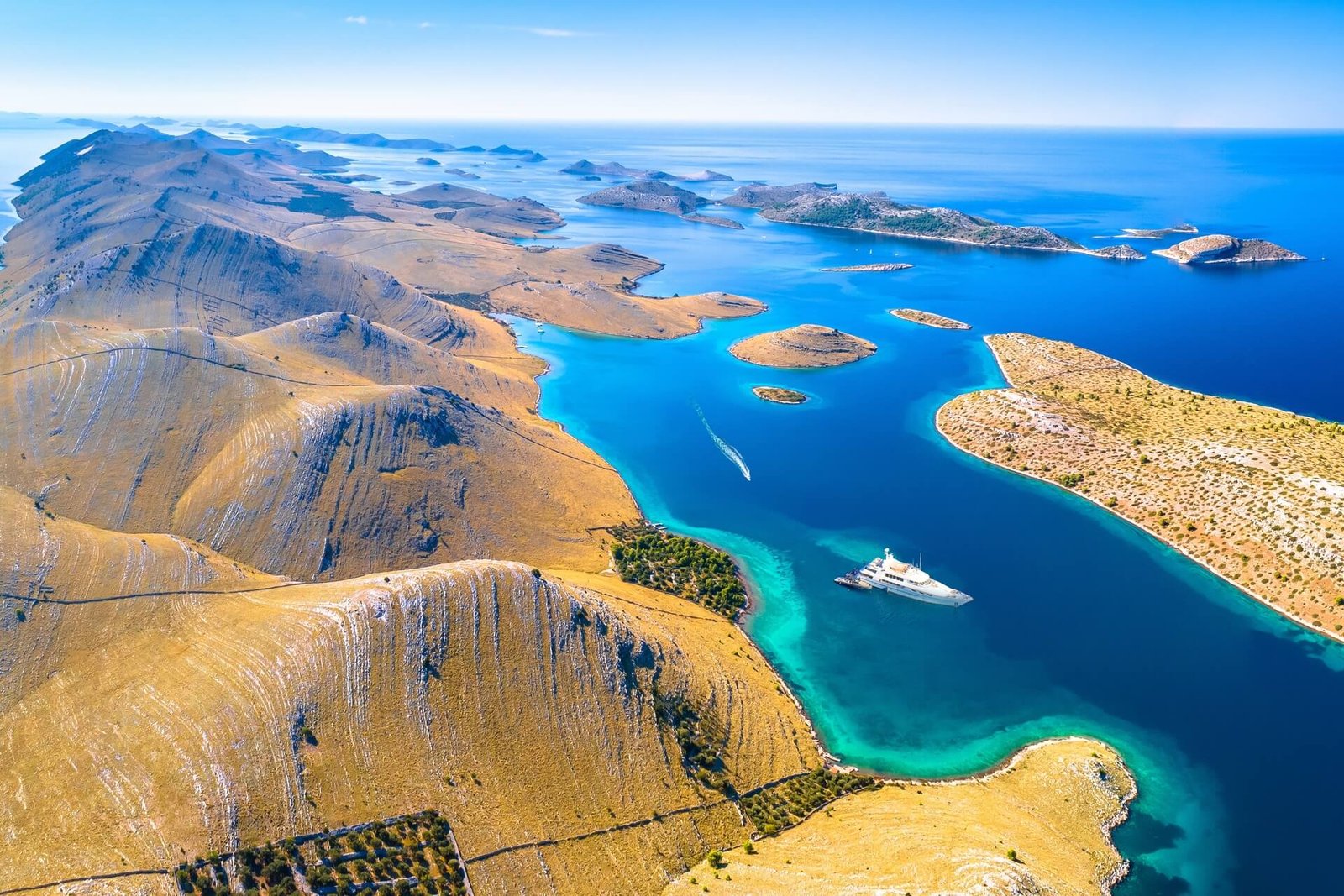
Day boats from Zadar offer access to the Kornati archipelago, a national park of roughly 140 mostly uninhabited limestone islands known for turquoise water, and to Dugi Otok, a long island with rugged cliffs, a fishing town called Sali, and the sandy Sakarun beach. The route allows a full day trip with return by evening.
Practical guidance covers choosing between organized excursions and private charters, costs ranging from 80 to 900 EUR depending on boat size and season, park entry fees, anchoring restrictions, and necessary gear like water and grippy shoes. Additional details address timing by season, ferry transfers to Dugi Otok, accommodation costs, and frequently asked questions about independent visits, trip duration, suitability for children, booking timing, and appropriate clothing.
Want to see the Kornati islands without booking a cruise that feels like a conveyor belt? Take a day boat from Zadar. You can reach the Kornati archipelago and the long, quiet shore of Dugi Otok in roughly one morning, and be back for an early dinner on the Riva.
I have done this route more times than I can count, mostly in May when the water is still cold but the crowds are absent. The first trip was a scouting run for a client from Zagreb who wanted a weekend house on the islands and needed to understand the sailing times in person. We left from the harbour at 8:30, and by 9:15 the mainland had shrunk to a grey line behind us.
The Kornati are a national park made of about 140 islands, islets and reefs, and most of the land is bare grey limestone. That is the whole point. Visitors come for the water, which shifts from deep navy to a startling turquoise over white seabed, and for the sense that nothing has been built here for centuries except a few stone walls and a handful of fishing shelters.
Dugi Otok is different. It is long and thin, almost fifty kilometres from end to end, and it has a rugged western coast with sea cliffs and a gentler eastern side facing the channel. Sali is the largest settlement, a working fishing and farming town where the bakery opens early and the konoba near the church serves grilled fish without a menu.
Choosing your boat and your day
Most day trips run as organised excursions from the Liburnia waterfront, with a skipper, a small crew and a stop for swimming in the middle of the archipelago. Expect to pay roughly 80 to 120 EUR per person for a full-day trip that includes lunch, depending on the season and the boat size. Private charters are a different league. A skippered boat for six people can cost anywhere from 400 to 900 EUR for a day, and prices move quickly in July and August.
Pick your boat by its size. Large catamarans carry sixty or more people and anchor in the most famous bays, which means queues for the swim ladder. Smaller boats of twelve to twenty passengers can reach quieter coves and stop where the big ones cannot. I usually recommend the smaller option, even if it costs a little more.
Practical things nobody tells you
The Kornati are part of a national park, so you pay an entry fee that is usually included in the tour price, but private boats must buy tickets separately. Anchoring is restricted in certain zones, and mooring buoys are the only allowed option in many bays. Your skipper will know which ones, so ask before you go rather than discovering the rules at the wrong moment.
Bring water, sun protection and a hat, because there is almost no shade on the islands. The sun reflects off the limestone and the heat builds quickly by eleven. Wear shoes with grip, since many entries into the sea are over sharp rock rather than sand. Dugi Otok has a few sandy beaches, most notably Sakarun, which is a long shallow bay with a beach bar, but it is a half-hour drive from Sali by a road that twists through the hills. Rent a car in Zadar if you plan to see it, and collect the car early because summer stock runs thin.
Timing matters more than most visitors expect. Late May and June offer warm water, fewer boats and easier parking in Zadar. July and August bring heat, big crowds and full anchorages by mid-morning. September brings the best sea temperature of the year, and the light turns gold in the afternoon. Winter trips rarely run because of the bora wind, which can cancel departures without much warning.
Getting there and staying over
Zadar sits on the mainland, and the ferry to Preko on Ugljan is the fastest link to the northern islands. The car ferry to Brbinj on Dugi Otok runs regularly and takes about forty minutes from Zadar’s Gaženica terminal. Drive the coast road south and you will arrive in Brbinj before you realise it, then cross the island to Sali by road. Allow about an hour for the whole transfer if you bring a car.
Accommodation on Dugi Otok ranges from simple rooms run by families to a few boutique stays in restored stone houses. Book early if you want a room with a sea view in July, because the best places fill months ahead. A double room in a family guesthouse in season typically costs between 70 and 130 EUR per night, though rates climb for the weekend and drop after mid-September. You will also pay the boravišna taksa, the tourist tax, which is charged per person per night and varies by property category. Ask your host for the exact figure so there is no surprise at check-out.
Frequently asked questions
Can I visit the Kornati without a tour?
Yes, but only with your own boat or a charter, since regular ferries do not serve the archipelago. Buy your national park ticket before you leave the harbour, and check mooring rules for each bay.
How long does a day trip take?
Most full-day tours run from about 9:00 to 17:00 and cover three or four swim stops. If you want Dugi Otok as well, plan an overnight, because the island deserves more than a passing glance.
Is the trip suitable for children?
Children generally enjoy it, provided they can swim or wear a life jacket. The rocky entries and open sun make it tiring for toddlers, so pack extra water and a lot of patience.
Do I need to book in advance?
It depends on the month. In May and September a walk-in booking usually works, while July and August need a reservation at least a few days ahead, and private charters often need weeks.
What should I wear on the boat?
Light clothes that dry fast, a swimsuit under your shorts, reef-safe sunscreen and sunglasses with a strap. Leave the heels at home, because the deck and the rocks both punish them.
📅 Last updated: