
For longterm winter rentals on the Dalmatian coast, I look for quiet stone streets, shuttered beach bars, and landlords who know the off-season rhythm. A good Dalmatian coast long term apartment rental is often easier to find once the summer crowds thin, but the best places still go fast. I’m Mark, and after years of helping readers and house-hunters on Croatia’s Adriatic coast, I’ve learnt that timing, paperwork, and a clear budget matter more than luck. Winter is different.
Winter light, salt air, and long-term stays on the Dalmatian coast.
Where to Look: Micro-Locations, Zones and Property Types
For long-term winter lets on the Dalmatian coast, location is not a postcard choice, it is a daily-life choice. A flat five minutes from the centre can feel very different from one tucked above the magistrala, and in winter that difference shows up in noise, wind, parking and how easy it is to get to a bakery before noon.
If you want simple living, look first at residential streets rather than summer-first addresses. In Split, areas around Spinut, Bačvice and Manuš often work well because you are close to shops, buses and year-round services. In Šibenik, the centre and the streets just above the waterfront can suit you if you are happy to walk a bit and do not need a car every day. Makarska has the same pattern, with the promenade drawing attention, while quieter streets one block back usually give better value and less late-night noise.
Korčula asks a different question. Do you want beauty at your door, or easier logistics? A flat in the old town can be lovely, but winter ferry timings, parking and delivery access can shape your week more than sea views do. If you plan to stay for several months, ask where the nearest legal parking space is, how far you are from the shop, and whether the landlord uses the property year-round or closes it up outside the season.
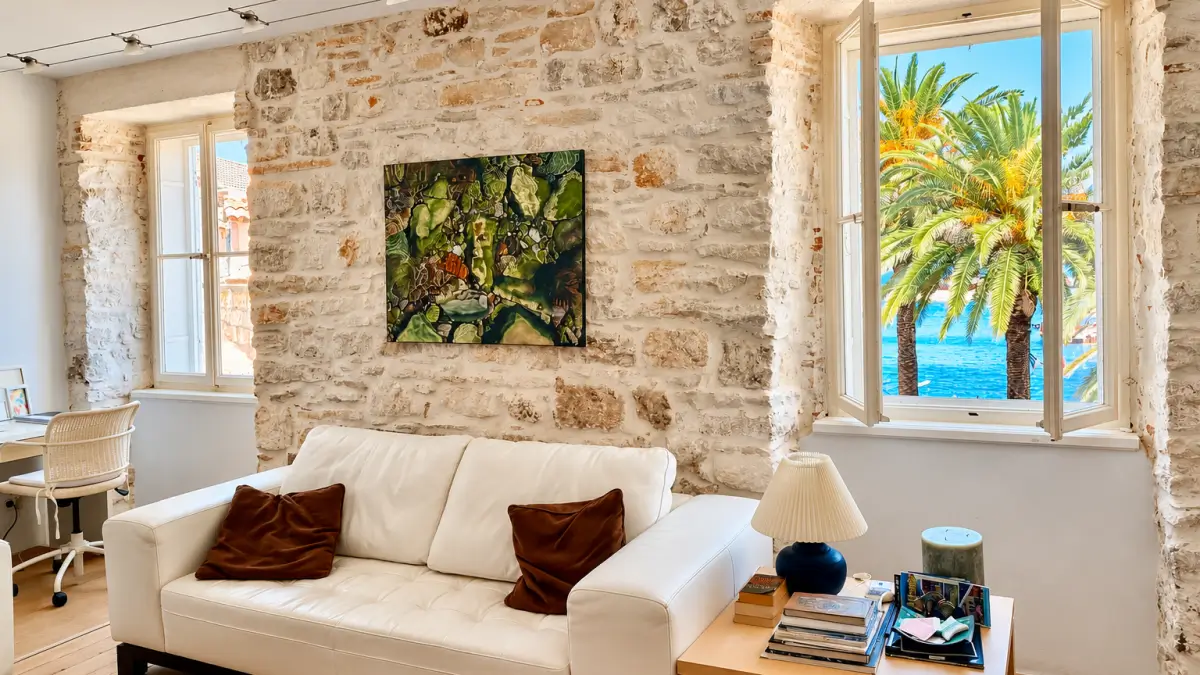
Property type matters just as much as the town. A modern apartment block often means better insulation, steadier heating and fewer surprises with damp. Older stone homes can be charming, but charm is expensive when the windows rattle in the bura and the walls hold cold like a cellar. If you are working remotely, check natural light and internet access before you get carried away by exposed stone and a sea-view terrace.
- Town centre flats suit you if you want shops, cafés and offices within walking distance.
- Residential blocks often give better heating, easier parking and lower winter rent.
- Older stone houses may suit slow living, but ask about insulation and humidity.
- Outlying villages can be cheaper, though you may need a car and a good sense of timing.
- Sea-facing homes look tempting, but they can be colder and pricier in winter.
That last point catches people out. A sea view is pleasant for a weekend; it is less charming when your heating bill starts climbing because the building leaks heat through old frames and poor sealing. If a landlord talks about “character”, ask about radiators, air-conditioning units with heating mode, window condition and whether the flat has been lived in through January before.
Zoning and building use also matter, especially if you are looking at a place that has been used for short lets or holiday guests. Some flats are set up beautifully for summer turnover but less well for a five-month stay. Storage may be thin, kitchen equipment may be limited, and the landlord may not have thought through winter comfort. Ask what stays in the property, what is removed, and whether utility costs are included or paid separately by meter.
A practical search often works best in this order: first, choose the town; second, choose the quarter; third, decide whether you need a lift, parking, quiet streets or sea air. That sounds plain, but it saves time and reduces bad viewings. If you start with the dream and ignore the daily routine, you may end up with the wrong kind of beautiful.
Where to Get Answers: Local Offices, Agents and Legal Help
Once you find a place, the next step is getting the paperwork right. In Croatia, that usually means speaking to the landlord, checking the property records, sorting your OIB if you need one, and making sure the rental terms match the property you are actually being shown.
The first stop is often the local estate agent, especially in Split, Šibenik, Makarska or on the larger islands. A good agent will tell you whether the property is available for the full winter season, whether utility costs are paid by the tenant, and whether the landlord wants a fixed-term agreement or month-to-month flexibility. Ask direct questions. If the answers are vague, treat that as information in itself.
For legal checks, the key offices are usually the Odjel za katastar nekretnina and the land registry, often referred to as gruntovnica. These are the places people turn to when they want to confirm parcel details, ownership or whether the use of the property matches what is being offered. You do not need to become a property lawyer overnight, but you should know that katastar and land registry records can matter if something looks unclear. If the address, owner or unit description feels off, pause and ask for a proper explanation.
For renters who need an OIB, the local tax office is usually the next practical stop. That number is often needed for formal agreements, utility setups or broader administrative steps during a longer stay. If you are staying for months rather than days, it is wise to ask at the outset whether the landlord expects you to register the tenancy, and who will handle the paperwork. A clear answer here can save a lot of back-and-forth later.
Lawyers and notaries can also help, especially if the contract is in Croatian and you want to be sure the terms are fair. You may not need full legal representation for a straightforward winter let, but a short review can help if the rent is high, the deposit is large, or the property has more than one owner. In mixed ownership cases, or when a flat is held through a family arrangement, a quick check can prevent a messy surprise.
- Estate agents help you find listings and explain local rental practice.
- Odjel za katastar nekretnina can help with parcel and property record checks.
- Gruntovnica is where ownership and title questions often get checked.
- Tax offices may be needed for OIB-related steps.
- Lawyers and notaries are useful when contracts are unclear or ownership is complicated.
Ask for copies, not promises. A landlord can say a lot over coffee in a konoba, but the contract is what counts when the weather turns and everyone remembers their own version of the deal. Look for the rent amount, deposit, utility arrangement, repair duties, move-out notice and whether the flat may be visited for maintenance during your stay. If the contract is only in Croatian and you do not read it confidently, get help before you sign.
One final habit pays off everywhere on the coast: keep a small paper trail. Save messages, take photos of meters and the apartment on move-in day, and note the date of handover. It is dull work. It also saves arguments, which is a fine trade in any winter.
Conclusion
I’ve found that the best winter lets on Croatia’s Adriatic coast are rarely the flashiest ones. You want a place that stays warm, sits near the shops you’ll actually use, and comes with paperwork that makes sense before you hand over a deposit.
If you keep one eye on the street, one on the contract, and another on the small things, like parking, heating and who handles the OIB and keys, you will make a far better choice. That is where a good winter stay begins, in the details.
Questions & Answers
When should you start looking for longterm winter rentals on the Dalmatian coast?
I’d begin in late summer or early autumn, when owners start lining up winter tenants and the better apartments are still on the market.
What makes a Dalmatian coast long term apartment rental good value?
Heating, insulation, parking, and walking distance to shops matter more than a sea view. A cheaper flat can become expensive if you need taxis or run the heating all day.
Do you need an OIB for a winter let in Croatia?
Often, yes, if the landlord wants a formal contract or you need to set up utilities. Ask early, because the paperwork can slow things down.
Which towns suit longer winter stays best?
Split, Šibenik, Makarska and some parts of Korčula all work well, but the right choice depends on how much you need year-round services, transport and parking.
What should you check before signing the lease?
Look at the contract, utility terms, deposit, meter readings and whether the property is registered properly. If the landlord cannot explain those points clearly, walk away.
📅 Last updated: