
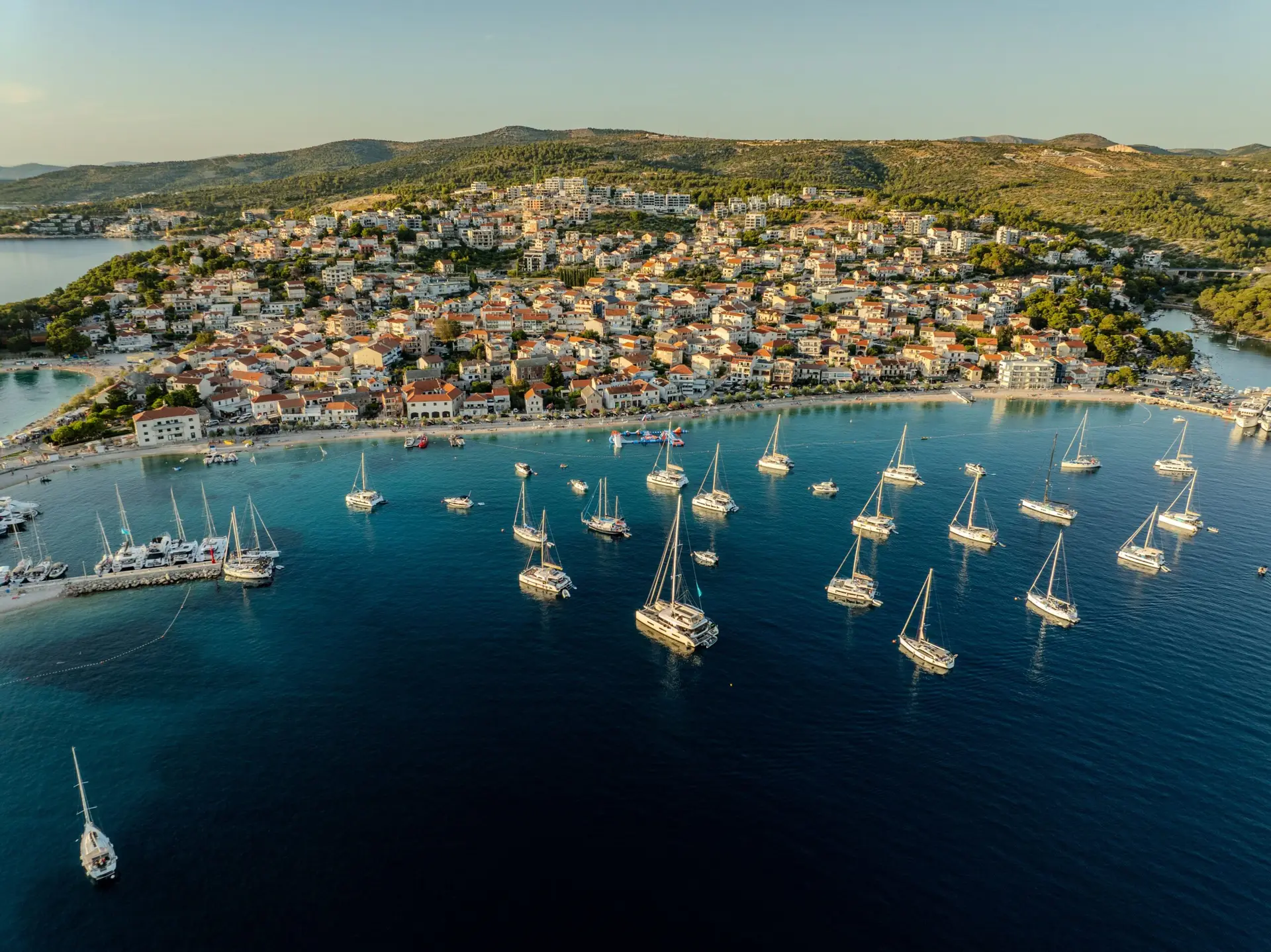
Planning Your Adriatic Sailing Route: Where to Start
The Adriatic Sea is one of Europe’s most rewarding sailing destinations — and Croatia holds the best cards. Over 1,200 islands, reliable summer winds, crystal-clear water, and a dense network of modern marinas make it genuinely hard to plan a bad route. The real challenge is choosing what to skip.
Most sailors enter Croatian waters through one of three main gateway ports: Split, Dubrovnik, or Zadar. Split is the most practical starting point for first-timers. It sits at the geographic midpoint of the Dalmatian coast, gives you access to both the central and southern island chains, and has excellent charter fleet infrastructure at Marina Kaštela and ACI Marina Split.
Wind patterns matter here. The maestral — a reliable northwest afternoon breeze — blows consistently from June through August, typically picking up around noon and settling by early evening. It’s a sailor’s gift. The bura, a sharp northeastern wind, can arrive fast and strong, especially in shoulder season. Always check the DHMZ forecast (Croatia’s national meteorological service) before departing any marina.
The Classic Central Dalmatia Loop (7–10 Days)
This is the route most experienced skippers recommend for a first Croatia sailing trip. Starting from Split, the loop covers the core of the Dalmatian archipelago without overextending distances between stops.
- Day 1–2: Split → Hvar Town — Cross to Hvar Island via the Brački kanal. Hvar Town marina fills fast in peak season; arrive before 17:00 or anchor in Palmižana bay on Sveti Klement island instead.
- Day 3: Hvar → Vis — Vis is the furthest inhabited island from the mainland and arguably the most authentic. Drop anchor in Komiža or the sheltered bay of Rukavac.
- Day 4–5: Vis → Korčula — Sail southeast past Šćedro island. Korčula Town has a small town port and ACI marina nearby in Korčula. The old town rivals Dubrovnik without the crowds.
- Day 6: Korčula → Makarska Riviera or Brač — Head north toward Bol on Brač, home to the famous Zlatni Rat beach. The Hvarski kanal here can produce strong maestral — ideal sailing conditions.
- Day 7–10: Brač → back to Split — Take your time returning via the northern coast of Brač or detour to Šolta island, one of the quietest and most underrated stops on the entire coast.
Croatia’s Best Marinas Along the Route
Croatia operates an extensive network of ACI marinas (Adriatic Croatia International Club) — 22 marinas spread along the coast and islands. They offer reliable facilities, fuel stations, water hookups, and technical support. Booking ahead is essential for July and August.
| Marina | Location | Berths | Best For |
| ACI Marina Split | Split | 355 | Charter base, provisioning |
| ACI Marina Hvar | Hvar Town | 160 | Central location, nightlife access |
| ACI Marina Vis | Vis Town | 124 | Quiet, authentic island stop |
| ACI Marina Korčula | Korčula | 150 | Old town access, cultural stop |
| Marina Milna | Brač | 200 | Sheltered bay, relaxed pace |
Beyond ACI, dozens of communal town ports (luka) and private anchor bays exist across the islands. Many smaller bays now have private buoy systems managed by local konoba restaurants — you pay a mooring fee, often offset against dinner. It’s an informal but widely accepted arrangement.
Regulations, Fees, and What You Must Know Before Sailing
Sailing Croatian waters requires proper documentation. Every vessel must hold a valid boat registration, third-party liability insurance, and the skipper must carry a recognized competency certificate (ICC or equivalent national license).
Croatia charges a vessel cruising permit (vignette) for all foreign-flagged boats. The fee is calculated based on vessel length and engine power, paid online through the e-Pomorstvo system before entering Croatian waters. Croatian-flagged charter vessels already have this covered.
The nautical tourist tax (nautička pristojba) applies per person per night on board — currently between €1 and €2 depending on the season. Marinas collect this automatically. Anchoring in designated anchor zones is generally free, though some protected bays within national parks (like Kornati or Mljet) require a separate park entry fee.
Kornati National Park deserves its own mention. Over 89 uninhabited islands, dramatic limestone cliffs, and some of the clearest water in the Mediterranean. Entry permits are purchased at the park authority office or through registered charter operators. Don’t skip it.
Frequently Asked Questions
When is the best time to sail the Croatian Adriatic?
June and early September are the sweet spots. The maestral blows reliably, marinas are accessible without peak-season chaos, and water temperatures are warm enough for comfortable swimming. July and August are busiest — plan and book berths well ahead.
Do I need a sailing license to charter a boat in Croatia?
Yes. Croatia requires a valid skipper’s license recognized under international standards — an ICC (International Certificate of Competence) is widely accepted. You’ll also need a VHF radio operator certificate (SRC) if operating a radio on board, which is strongly recommended.
Can I anchor freely anywhere along the Croatian coast?
Not entirely. Anchoring is permitted in most open bays, but national parks, nature parks, and protected ecological zones have specific restrictions. Some bays prohibit anchoring to protect posidonia seagrass meadows. Always consult updated nautical charts and the official Croatian Maritime Directorate notices before dropping anchor in unfamiliar areas.