
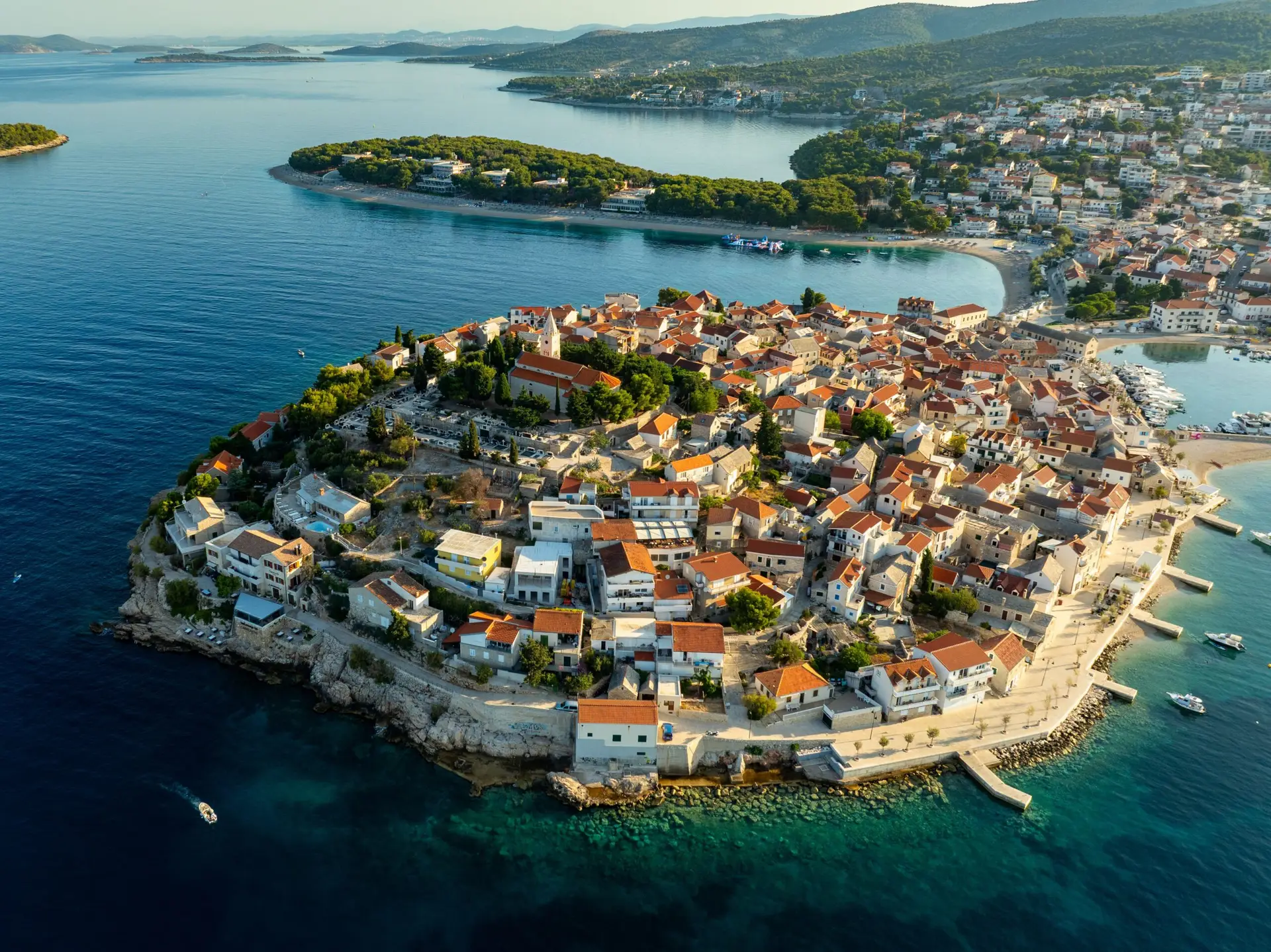
Driving the Adriatic: The Route That Actually Delivers
The Jadranska magistrala — Croatia’s legendary coastal highway — is one of Europe’s most cinematic drives. Cliffside bends, hidden coves, stone villages perched above turquoise water. But driving it without a plan means missing the best parts entirely. This itinerary covers the full stretch from Rijeka to Dubrovnik, built around real stops worth your time, not just the ones that appear on every tourist poster.
Plan for 7 to 10 days if you want to actually stop, swim, and eat properly. Rushing this route in 3 days is possible, but it would be a waste.
Day-by-Day Road Trip Itinerary Along the Croatian Adriatic
Days 1–2: Rijeka and the Kvarner Gulf
Start in Rijeka — Croatia’s third-largest city and an underrated launch point. The city has genuine urban energy, a strong coffee culture, and the covered market (Tržnica) is worth an early morning visit. From Rijeka, take the coastal road south toward Opatija. The Habsburg-era villas along this stretch are remarkable, and Lovran’s old town is far quieter than Opatija despite being just minutes away.
From Kvarner, consider a short ferry hop to Cres or Krk island before continuing south. The Kvarner islands are often skipped by tourists racing to Dalmatia — that’s exactly why they’re worth stopping at.
Days 3–4: Zadar Region and Northern Dalmatia
The drive south along the magistrala becomes more dramatic after the Velebit mountain range frames the coast. Nin — a tiny town on a small island connected by a stone bridge — is one of the oldest Croatian royal towns and sits just 15 minutes from Zadar. Its lagoon beach is famous for healing mud (ljekovito blato) and its shallow warm water is unlike anything else on the coast.
Zadar itself deserves a full day. The Sea Organ (Morske orgulje) is genuinely extraordinary at dusk, and the old town’s Roman forum still sits in the middle of a living neighbourhood. Stay the night and eat at a konoba in the old town — fish stew (brudet) with polenta is the local standard.
Days 5–6: Šibenik, Krka, and the Split Approach
Šibenik is one of the most underappreciated cities on the Adriatic. Its UNESCO-listed Cathedral of St James was built entirely from stone without mortar — architects still find it remarkable. The fortress of St Michael above the old town offers unobstructed views of the channel below.
Krka National Park sits just inland, roughly 20 minutes from Šibenik by car. Unlike Plitvice, you can reach Krka’s waterfalls without a long walk. Swimming near Skradinski buk was banned in 2021, but the park remains spectacular. Skip it in peak July–August crowds and go at 8am if you must visit in summer.
Approach Split through Trogir — a small UNESCO island town connected by a short bridge. Walk the Riva (Trogir’s waterfront promenade) before continuing to Split.
Days 7–10: Split, the Islands, and Dubrovnik
Split is not a stopover city. Diocletian’s Palace is a living neighbourhood where people hang laundry between Roman columns. Give it two nights. Day trips from Split run to Brač, Hvar, and Vis — but if you only take one, make it Vis. The furthest inhabited island from the mainland, Vis stayed closed to foreigners until 1989 and still feels genuinely unspoiled.
The final leg south from Split to Dubrovnik requires crossing into Bosnia and Herzegovina briefly at Neum — bring your passport regardless of EU status. The Pelješac Bridge (opened in 2022) now allows drivers to bypass Neum entirely, staying fully within Croatia. Most rental car agreements now cover this route without additional paperwork, but confirm with your rental company before departure.
Arrive in Dubrovnik with at least two days. Walk the city walls early morning before 8am — the crowds that arrive by 10am are significant, especially in July and August.
Practical Information: What You Need Before You Drive
- Vignette: Croatia does not require a highway vignette — tolls are paid at booths (cash and card accepted).
- Fuel: Petrol stations are frequent along the magistrala; smaller coastal towns may have limited hours after 8pm.
- Tourist tax (boravišna pristojba): Charged per night at accommodation — typically €1–2.50 per person depending on the category and season.
- Ferries: Book Jadrolinija ferries in advance for July and August — walk-on passengers are easy, but car spots fill quickly.
- Parking: Paid in most coastal towns; blue zones are strictly enforced in Split and Dubrovnik. Consider parking outside the old town and walking in.
- Driving speed: 130 km/h on highways, 90 km/h on open roads, 50 km/h in settlements. Speed cameras are common.
Frequently Asked Questions
How long does it take to drive the full Adriatic coast from Rijeka to Dubrovnik?
The pure driving distance is roughly 600 km, which takes around 7 to 8 hours without stops. With sightseeing, island detours, and overnight stays, a realistic itinerary is 7 to 10 days. Driving it faster is possible but defeats the purpose of the route entirely.
Is it better to drive the Adriatic coast in summer or shoulder season?
Shoulder season — May, June, and September — gives you 90% of the experience with a fraction of the crowds. July and August bring significant traffic on the magistrala, packed ferries, and higher accommodation prices. September is widely considered the best month: warm sea, lower prices, and quieter roads.
Do I need a special car rental agreement to cross into Bosnia at Neum?
Since the Pelješac Bridge opened in 2022, most drivers can now avoid the Neum border crossing entirely and stay within Croatia. If you do plan to cross into Bosnia or Montenegro, confirm with your rental company beforehand — cross-border permissions vary by provider and are not always included in standard agreements.